Scientists have discovered new quantum defects in diamonds: they could change the future of quantum computing
Quantum defects in diamonds, research by John Mark Martirees, prospects for quantum processors and sensors operating at room temperature


This discovery could bring us closer to creating quantum processors and ultra-sensitive sensors that operate without extreme cooling.
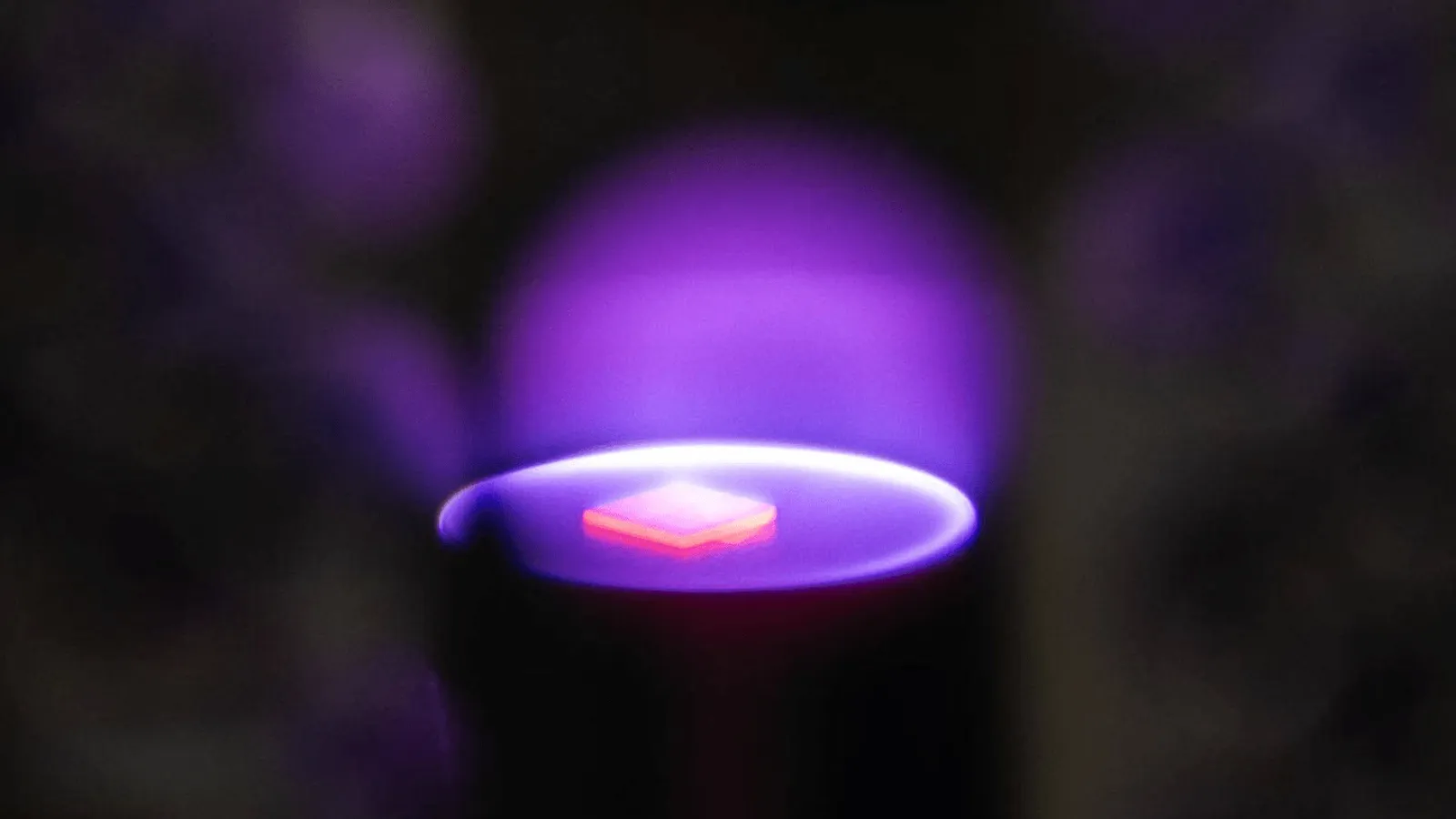
Diamonds are traditionally considered a symbol of perfection due to their strong and orderly crystal structure. However, for quantum technologies, it is precisely their imperfections that may hold the greatest value. The absence of a single carbon atom, or its replacement with another chemical element, can alter the crystal's electronic properties and create a local quantum system suitable for storing and processing information.
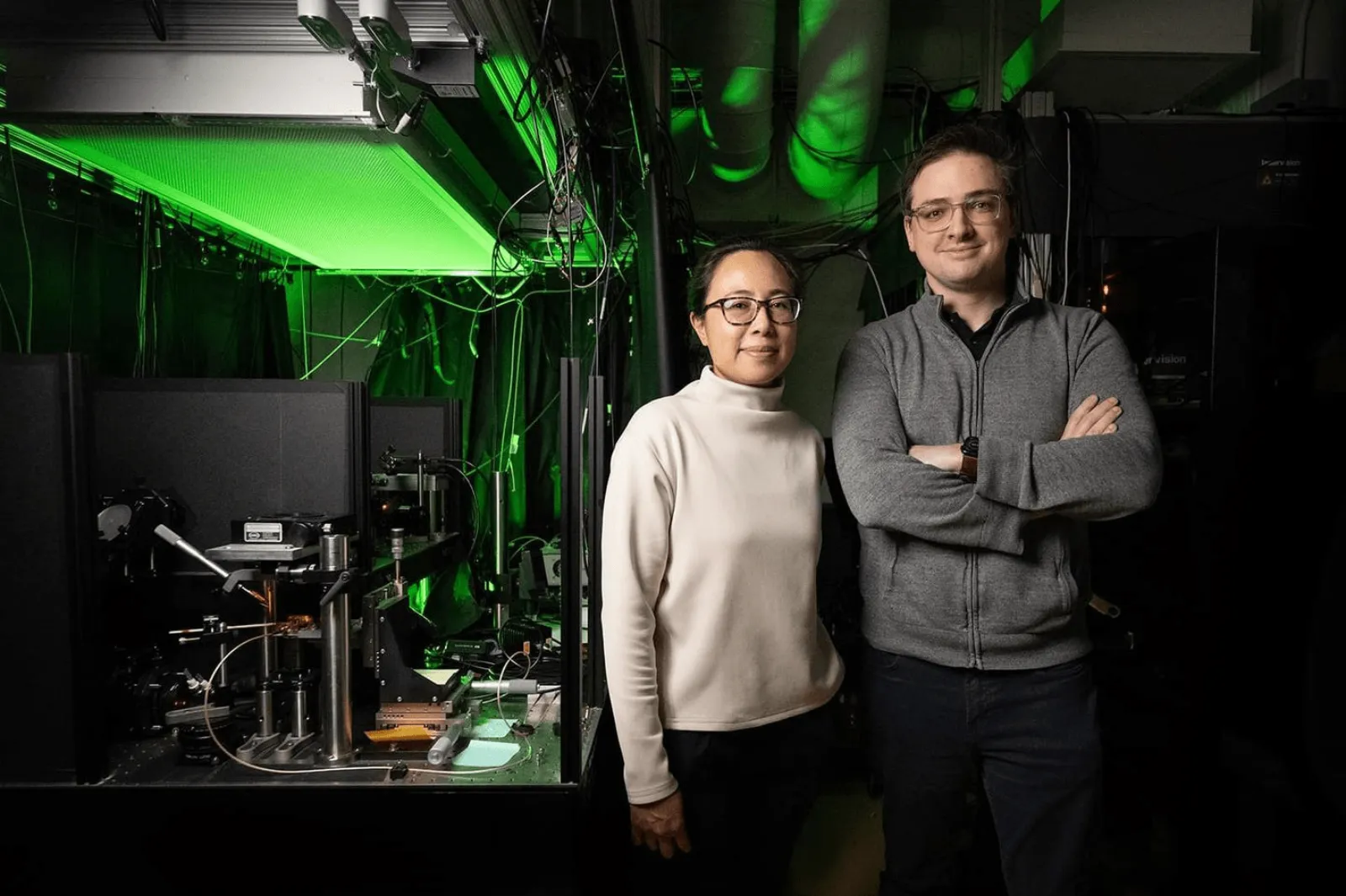
In a study published in the scientific journal ACS Central Science, physicist John Mark Martirees from the Princeton Plasma Physics Laboratory (PPPL) proposed a new way to study such defects. The method allows researchers to move away from extremely resource-intensive simulations of large crystal sections and instead focus on a small group of atoms directly surrounding the defect of interest.
Why do defects make diamonds useful for quantum computers?
A diamond consists of carbon atoms bonded in an extremely strong three-dimensional crystal lattice. In a perfect crystal, every atom occupies a strictly defined position. But if an atom is missing or replaced by an atom of another element, the material's electronic structure changes.
These disruptions are called point defects. Some of them form so-called color centers, which are capable of absorbing and emitting light at specific wavelengths.
Nitrogen-vacancy centers, or NV centers, are particularly well-studied. They occur when a nitrogen atom replaces a carbon atom, and a neighboring spot in the crystal lattice remains empty.
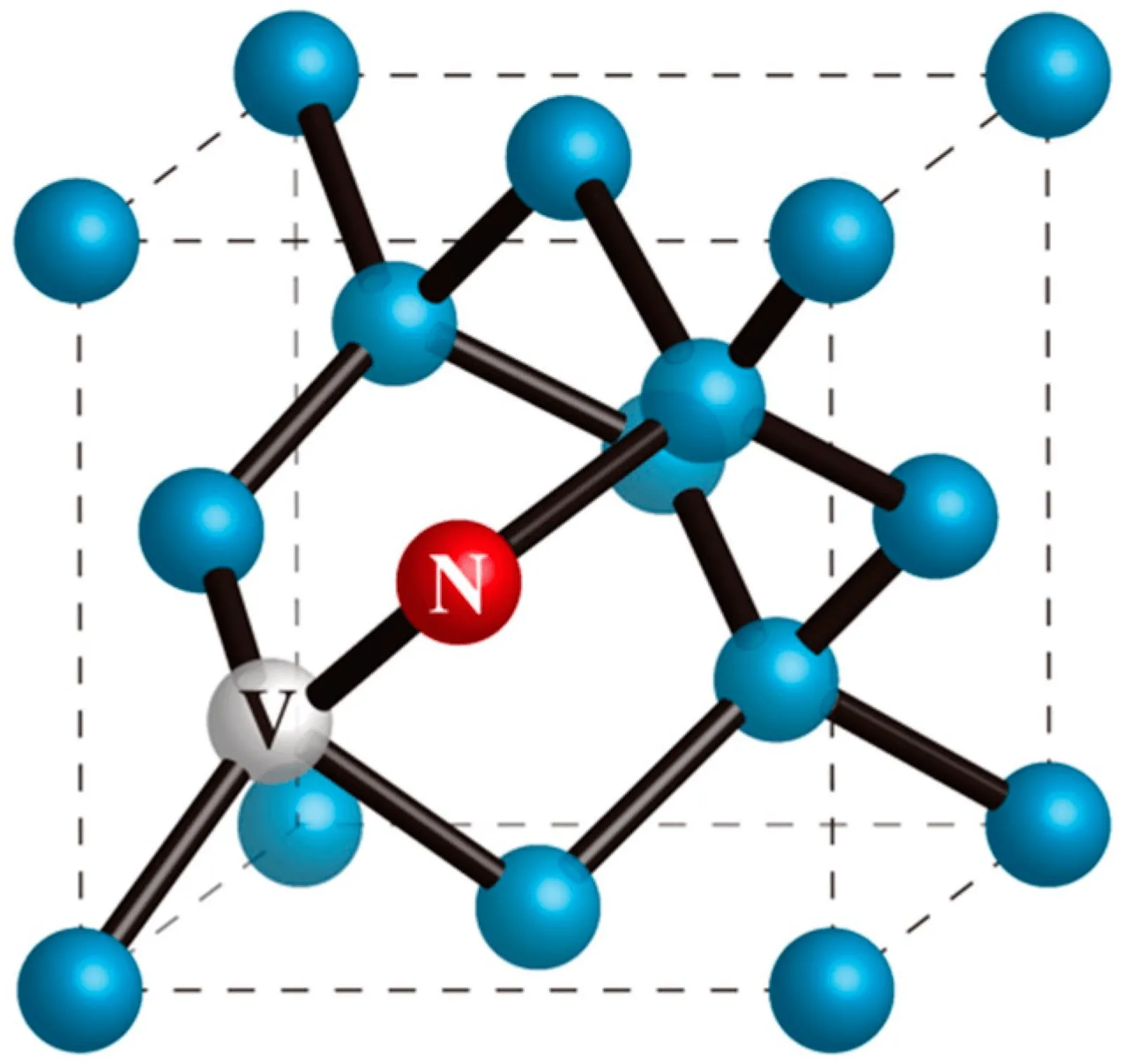
The electron spins in such structures possess quantum properties that can be manipulated using laser radiation and microwave pulses. Certain quantum states can be used to store information, while changes in the intensity of the emitted light allow the results to be read.
One of the main advantages of diamond defects is that some of them retain useful quantum properties even at room temperature. This sets them apart from many other quantum platforms, which require cooling to near absolute zero to function.
However, not all defects are equally suitable for quantum computing. Some lose quantum coherence quickly, others interact poorly with light, and some are too difficult to create and control.
New method allows for the study of just 16–30 atoms
The main innovation of this research lies in the way quantum defects are modeled.
Traditional methods require calculating the electronic structure of relatively large fragments of the crystal. Such computations can be extremely complex, as they must account for the interactions of many electrons and atoms.
Martirees proposed treating the defect as a small molecular system embedded within the diamond lattice. Instead of modeling a large crystal, he isolates a region of 16–30 atoms directly around the defect.
This approach allows for the use of well-established quantum chemistry methods that have been applied to studying molecules for decades.
According to the researcher, the computational cost of analyzing a defect becomes comparable to modeling a relatively simple molecule.
This fundamentally changes the possibilities for searching for new quantum materials. Instead of the extremely expensive simulation of every potential defect, scientists can much more rapidly explore a large number of variants and identify the most promising ones.
At the same time, reducing the model does not mean a complete abandonment of physical accuracy. The researcher developed an approach that allows for the inclusion of the key electronic properties of the local crystal region.
Boron and oxygen open new possibilities
Using this new methodology, Martiretess investigated diamond defects involving various chemical elements and discovered promising structures containing boron and oxygen.
Their optical characteristics are of particular interest.
Well-studied NV centers are capable of emitting red light under certain conditions. The newly studied oxygen defects can demonstrate emission in the blue part of the spectrum, while structures involving boron are linked to ultraviolet emission.
This difference has significant practical implications.
If different types of quantum centers interact with light at different wavelengths, they could potentially be combined within a single device and controlled more selectively.
For example, a laser of a specific wavelength could target one type of defect while having a significantly weaker effect on adjacent structures of another type.
In the long term, such an approach could simplify the targeted control of quantum elements and reduce unwanted interactions between them.
Why are quantum computers so sensitive to errors?
Quantum computers use qubits, which can exist in a superposition of states. When multiple qubits interact, quantum correlations arise, allowing for the implementation of algorithms that are inaccessible to classical computers in the same form.
But quantum information is extremely sensitive to the environment.
Thermal fluctuations, electromagnetic fields, interactions with neighboring atoms, and other physical processes can disrupt quantum coherence. As a result, the computational system gradually loses the information necessary to produce the correct answer.
To combat this problem, developers use various methods, including quantum error correction, material improvements, and the isolation of quantum elements from external influences.
Diamonds are of particular interest due to their rigid crystal structure and the ability to create localized electronic states.
The new method does not automatically eliminate quantum errors. Its task is to help researchers find structures with the most suitable physical characteristics.
Quantum computers without massive refrigerators
One of the most attractive prospects of diamond quantum technologies is the possibility of operating at relatively high temperatures.
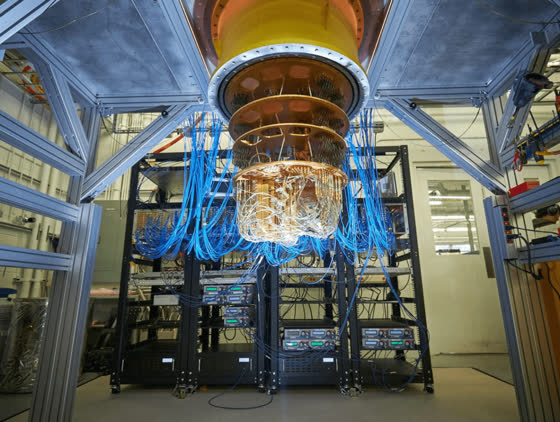
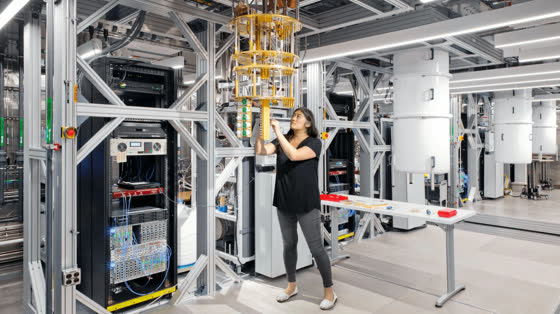
For example, IBM and Google's superconducting quantum processors typically require cooling to temperatures on the order of a few millikelvins—that is, thousandths of a degree above absolute zero.
This requires complex cryogenic setups that occupy significant space and demand specialized infrastructure.
Certain quantum states in diamond NV centers can be created, controlled, and read at room temperature. This makes such systems attractive for developing compact quantum sensors and individual components for future quantum computers.
However, there is an important limitation here. The ability of a single quantum center to work at room temperature does not mean that a full-scale multi-qubit processor based on it will be able to function effectively without cooling.
To perform complex quantum operations, it is necessary to ensure interaction between qubits, high readout precision, and sufficient coherence time. Some promising diamond platforms still require cryogenic temperatures.
Therefore, this new study opens up additional possibilities for finding suitable materials, but it does not yet solve all the engineering challenges involved in building a scalable quantum computer.
More Than Just Computing: Diamonds Could Become Ultra-Sensitive Sensors
The applications for quantum defects extend far beyond computing.
NV centers are already being actively researched as the foundation for extremely sensitive magnetometers capable of detecting weak magnetic fields at microscopic distances.
Such sensors could potentially prove useful in materials science, biological research, medicine, and geophysics.
For example, a diamond-based quantum sensor could measure the magnetic properties of individual materials with very high spatial resolution. This allows for the study of physical processes that are difficult to observe using traditional methods.
New types of color centers with different optical properties could expand the capabilities of these devices. Scientists will be able to select the defects best suited for a specific measurement range, operating conditions, or optical readout method.
What else is happening in diamond quantum technologies?
The PPPL research is part of a broader scientific trend that demonstrated several notable achievements in 2026.
In September, researchers from Delft University of Technology and Fujitsu presented a prototype quantum computer that utilizes tin defects in diamonds and integrated photonic circuits. This system demonstrates the possibility of combining diamond spin qubits with optical information transfer technologies.
Another research paper, published in the journal npj Quantum Information, demonstrated electron spin coherence lasting about ten seconds in a specially prepared diamond.
These results show that the development of diamond quantum technologies is progressing in several directions simultaneously: searching for new defects, increasing quantum state storage time, creating photonic interfaces, and developing scaling methods.
What's next?
The next stage will involve experimental verification of the promising defects identified during the computational study.
Scientists will need to determine how stably such structures can be created in real diamond crystals, how long they can maintain quantum states, and how precisely they can be controlled.
Studying the interaction of these new centers with laser radiation, microwave pulses, and neighboring quantum elements will be particularly crucial.
If the calculations are confirmed experimentally, researchers will gain additional options for designing quantum devices. Instead of relying on a limited set of well-studied defects, there will be the opportunity to choose atomic structures with optimal characteristics for a specific task.
If you are interested in AI, technology, and the future—welcome to my channel to discuss and share updates.
Translated from Russian. Original on vc.ru: Учёные обнаружили новые квантовые дефекты в алмазах: они могут изменить будущее квантовых компьютеров