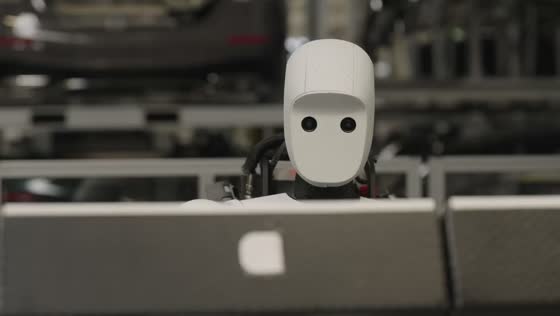
AI is bringing back magnetic tape: Fujifilm invests €57 million in decades-old technology
Fujifilm scales up magnetic tape production: AI technology, cost-effective storage, data protection from attacks, long-term archiving.

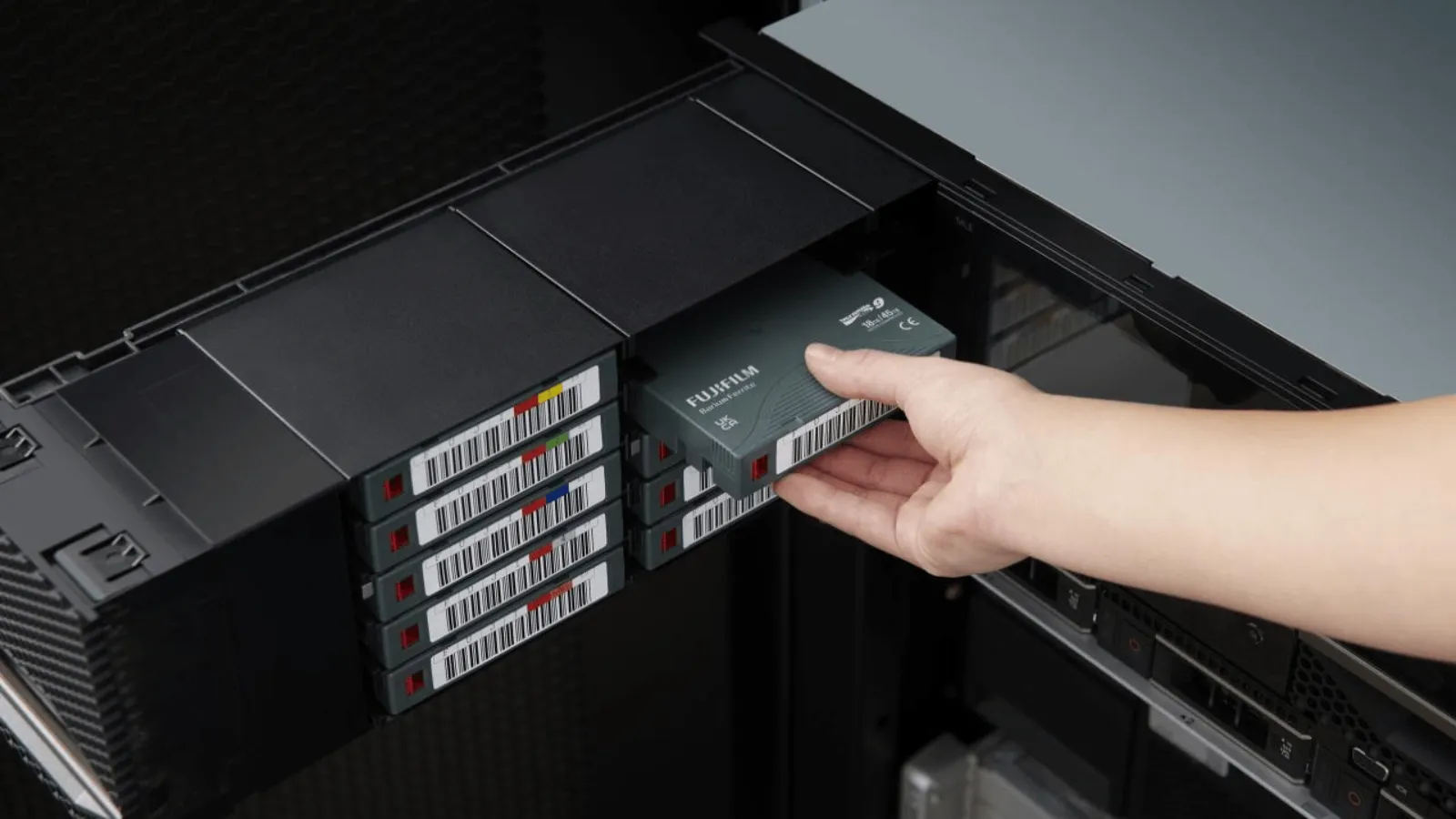
The reason for this unexpected comeback of an old technology lies in the rapid growth of data volumes driven by artificial intelligence and cloud services.
On October 29, 2026, Fujifilm announced a large-scale modernization of its plant in Odawara, Kanagawa Prefecture. The investments will be distributed over the 2026 to 2028 fiscal years. The funds will be directed toward new equipment, expanding production lines, and increasing headcount. According to the company, this represents its largest investment in production infrastructure for LTO standard magnetic tapes.
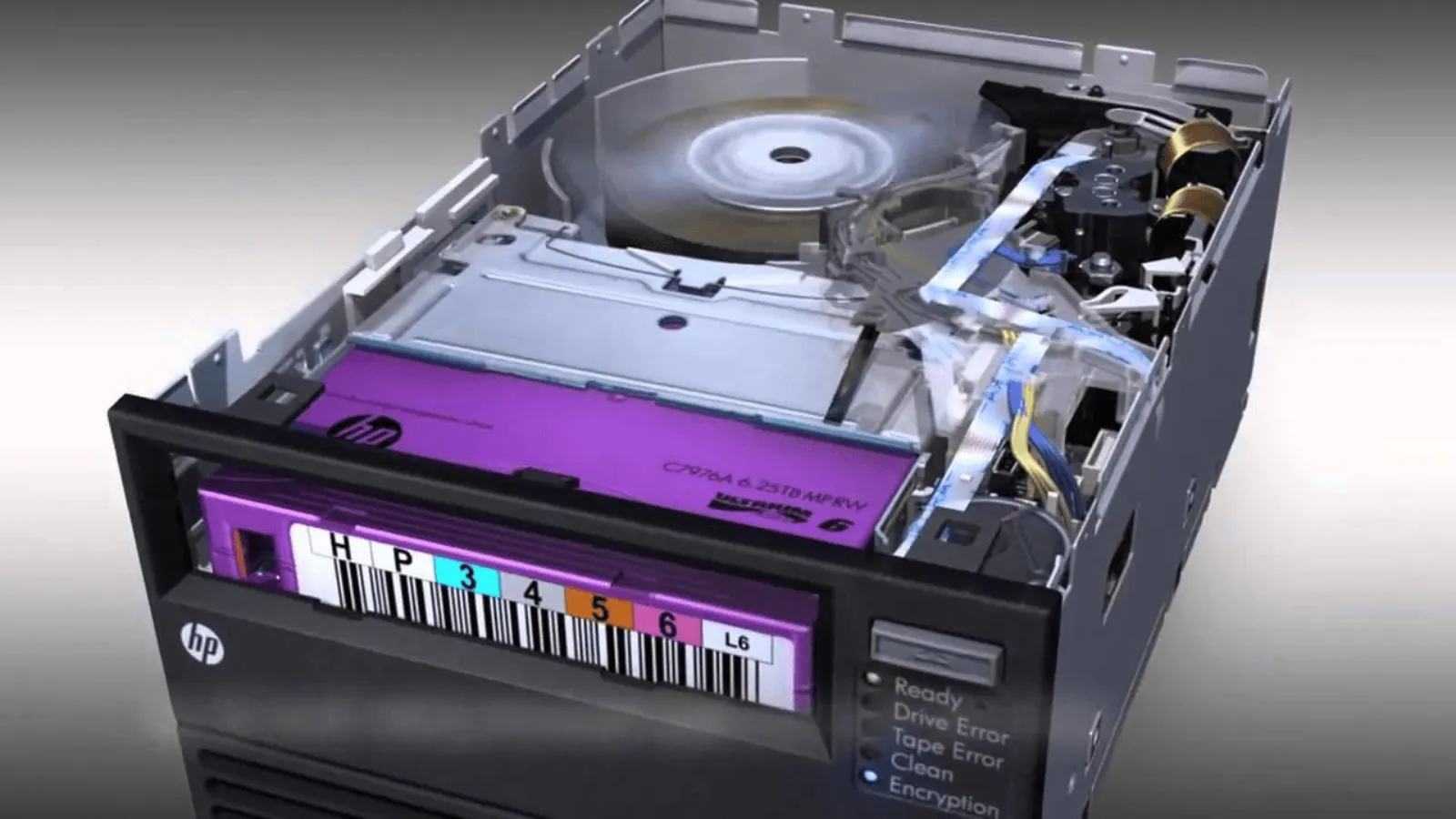
Why is artificial intelligence bringing back magnetic tape?
The development of generative AI leads to the accumulation of massive datasets: training sets, backups, research materials, and computational results. However, not all of this information needs to reside permanently on expensive SSDs or hard drives.
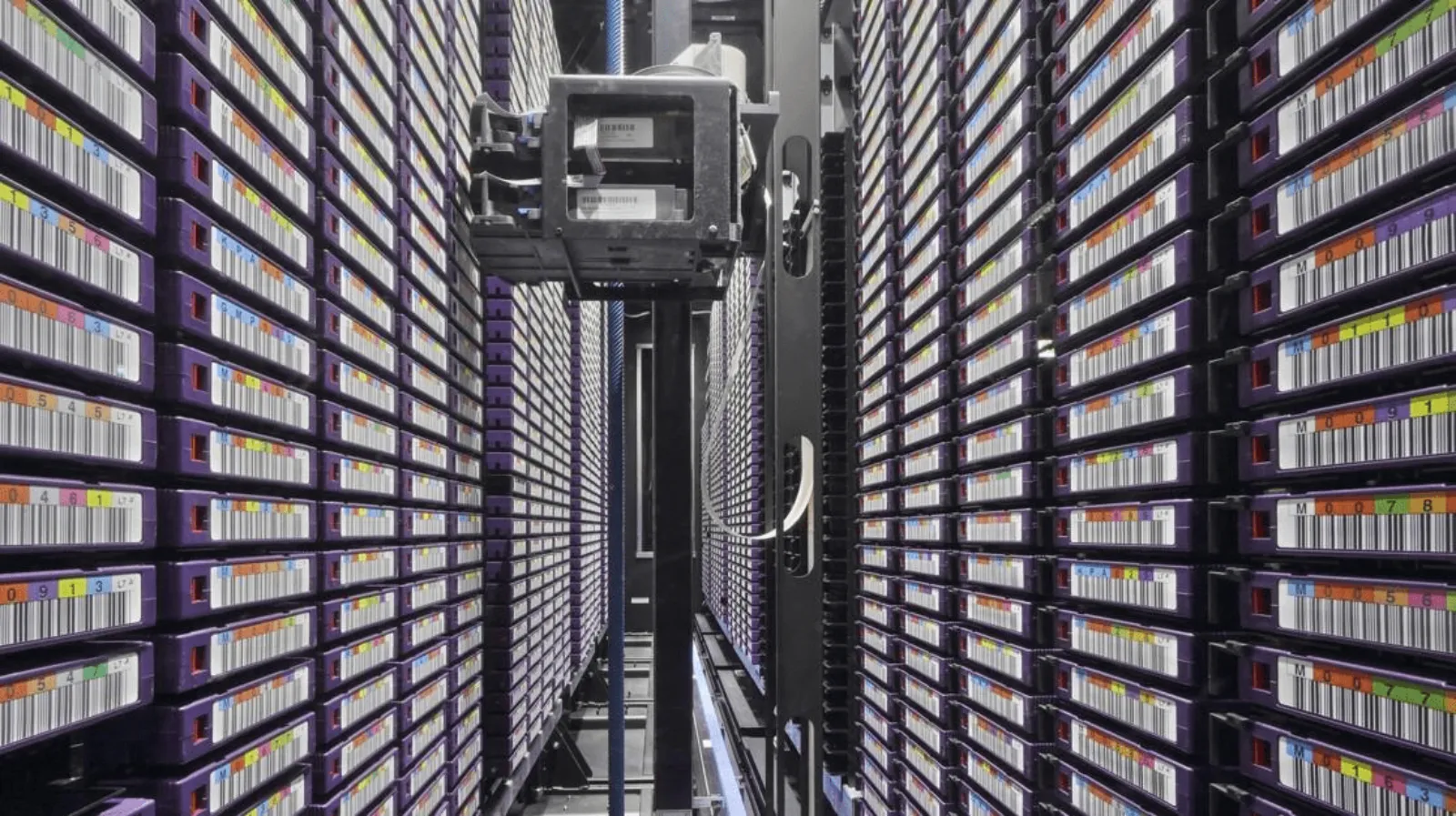
For long-term archiving, magnetic tape remains an economically attractive solution. Once recorded, a cartridge can be removed from the drive and stored without constant power. This reduces the energy consumption of archival infrastructure and allows for the physical isolation of data from the network.
The latter is particularly crucial for protecting backups from ransomware. If an archive is not connected to computers, it is significantly harder for attackers to remotely delete or encrypt it.
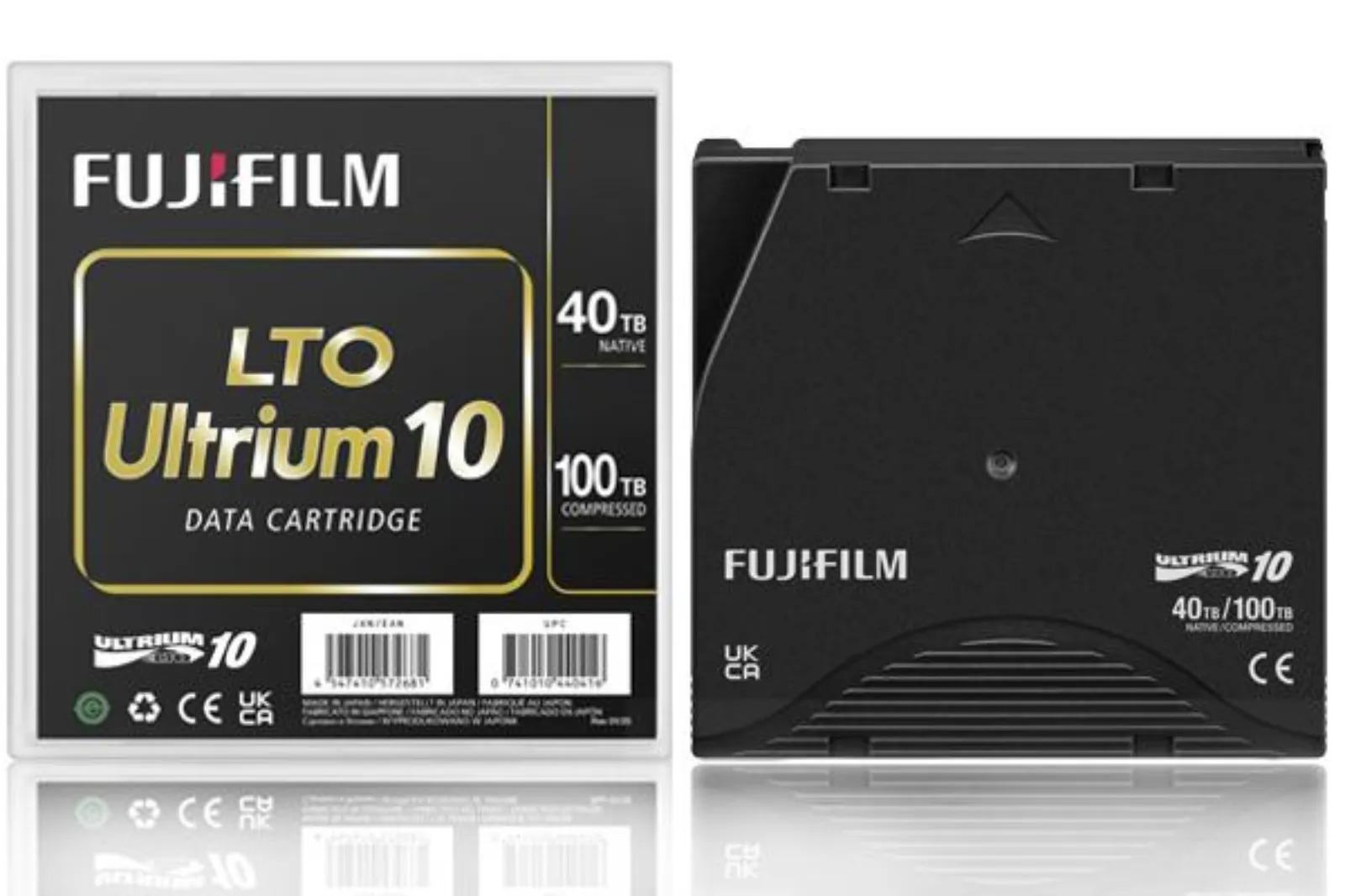
Up to 40 terabytes in a single cartridge
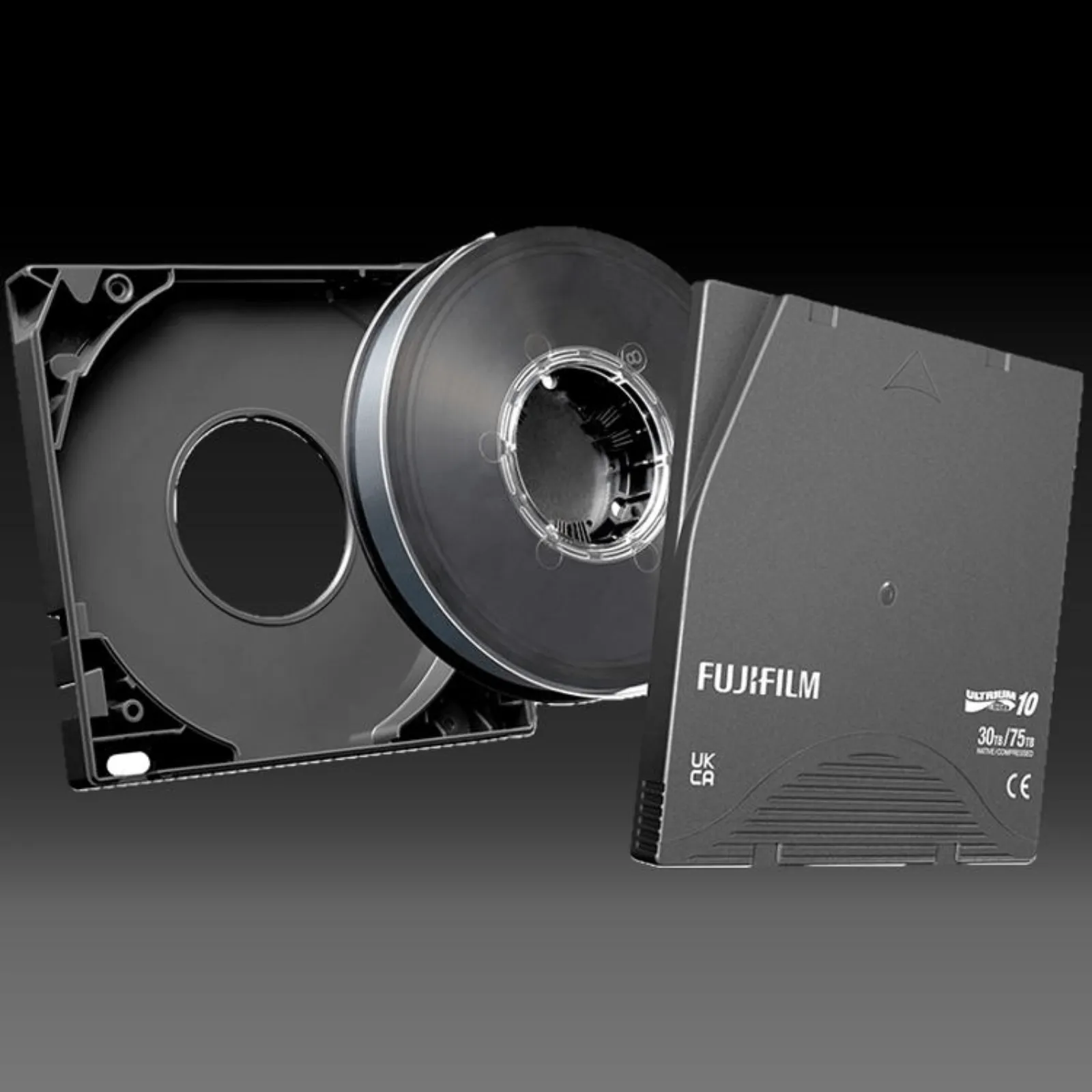
The primary product of this production expansion will be Fujifilm LTO Ultrium 10. A single cartridge is capable of storing up to 40 TB of uncompressed data, and with a hypothetical compression ratio of 2.5:1, the declared capacity reaches 100 TB.
To increase recording density, Fujifilm uses its own hybrid magnetic particles, combining barium ferrite and strontium ferrite technologies. Reducing particle size allows more information to be placed on the same area of tape.
Unlike disk drives, magnetic tape provides sequential data access. To read a specific file, the device may require rewinding. Therefore, the technology is suitable for archives and backups, but significantly worse for applications that require instant random access.
Why is Fujifilm increasing production right now?
Fujifilm has been producing magnetic tapes for data storage since 2000, and its developments in magnetic materials have significantly increased recording density. The company claims to hold the top position in the global market by production share of such media.
As cloud services and AI infrastructure grow, the need for long-term information storage becomes increasingly apparent. For large data centers, the cost of storing petabytes of data over many years may prove more important than the access speed to every individual file.
This is exactly the segment targeted by the new investments. Fujifilm expects to increase its production capacity by approximately fivefold in terms of the data volume the produced media can hold, rather than necessarily by the number of cartridges manufactured.
What comes next
The plant modernization will take place gradually through 2028. Fujifilm intends to expand the production of LTO Ultrium 10 and ensure stable supplies for enterprise clients, cloud providers, and data center operators.
The development of magnetic materials also opens up opportunities for further increasing cartridge capacity. However, increasing recording density must be accompanied by the development of compatible drives, automated loading systems, and long-term storage technologies.
The great paradox of the AI era is that the future of computing is becoming increasingly dependent on technologies from the past. While manufacturers develop more powerful processors and accelerators, magnetic tape maintains its niche as a method for inexpensive, energy-efficient, and physically isolated storage of massive volumes of data.
If you are interested in the topics of AI, technology, and the future—welcome to my channel to discuss and share updates.
Translated from Russian. Original on vc.ru: ИИ возвращает магнитные ленты: Fujifilm инвестирует €57 млн в технологию, которой десятки лет