Anthropic Unveils Claude Fable 5.2 and Mythos 5.2: A Thousand AI Agents Formalized the Proof of Fermat's Last Theorem in 30 Hours
Claude Fable 5.2 and Mythos 5.2 from Anthropic, formalization of the proof of Fermat's Last Theorem, solving black hole physics problems, creating electronic devices

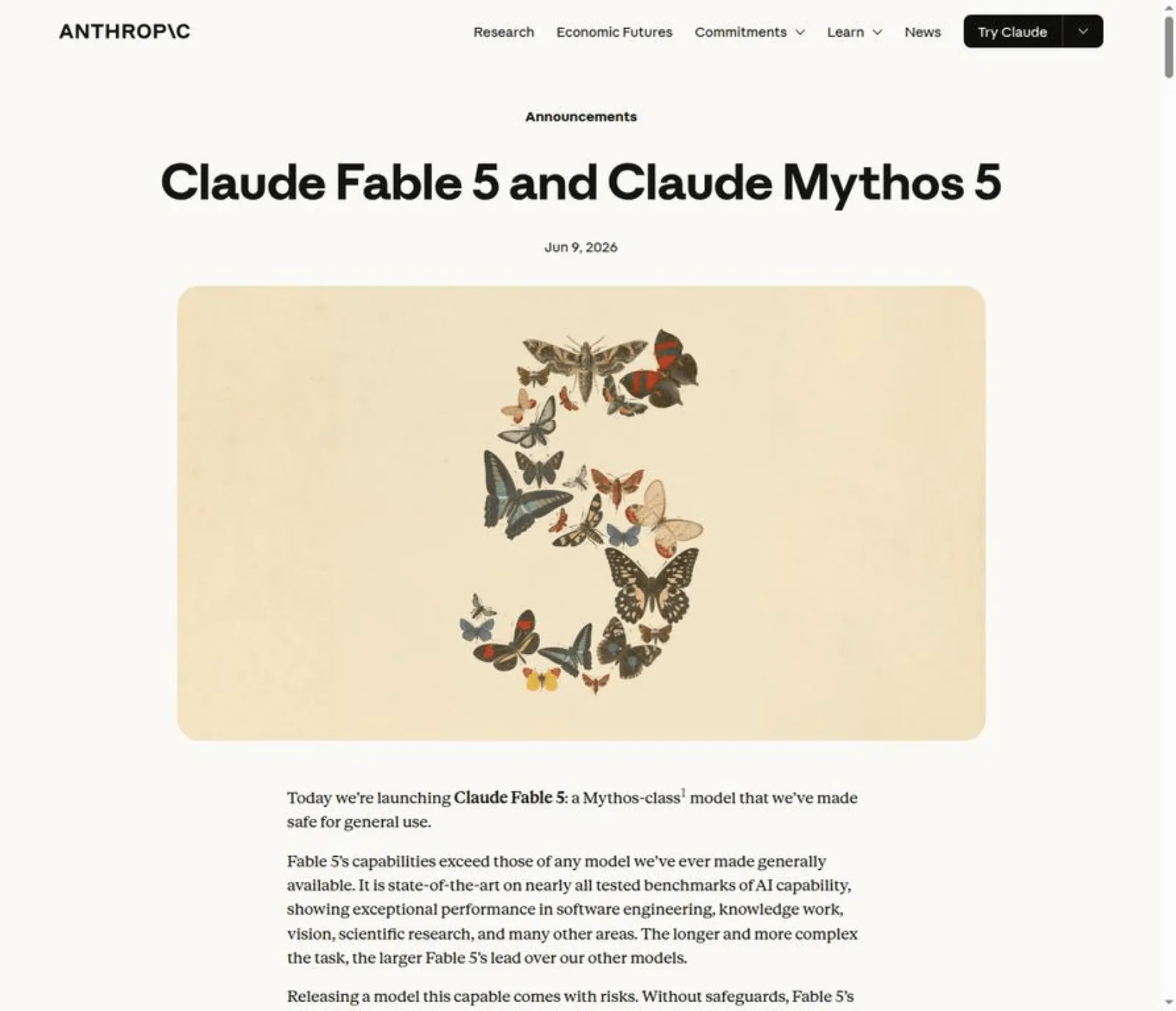
Anthropic has announced a new generation of its most powerful artificial intelligence models, Claude Fable 5.2 and Mythos 5.2. The company claims significant progress in programming, mathematics, scientific research, and cybersecurity.
Among the most impressive results are the formalization of the proof of Fermat's Last Theorem in 30 hours, the solution to two open problems in black hole physics, and the development of three working electronic devices.
On November 9, 2026, Anthropic introduced Claude Fable 5.2 and Claude Mythos 5.2, continuing the evolution of its model family focused on complex intellectual tasks. This new generation is designed not just for writing code and analyzing information, but for long-term autonomous operation, during which the AI is capable of planning actions, using tools, verifying results, and coordinating other AI systems.
The company is placing particular emphasis on scientific and engineering achievements. While progress in language models was previously measured primarily by benchmark results and response quality, Anthropic is now demonstrating capabilities through tasks with concrete, verifiable outcomes: mathematical proofs, working electronic devices, and research computations.
A Thousand AI Agents and Fermat's Last Theorem
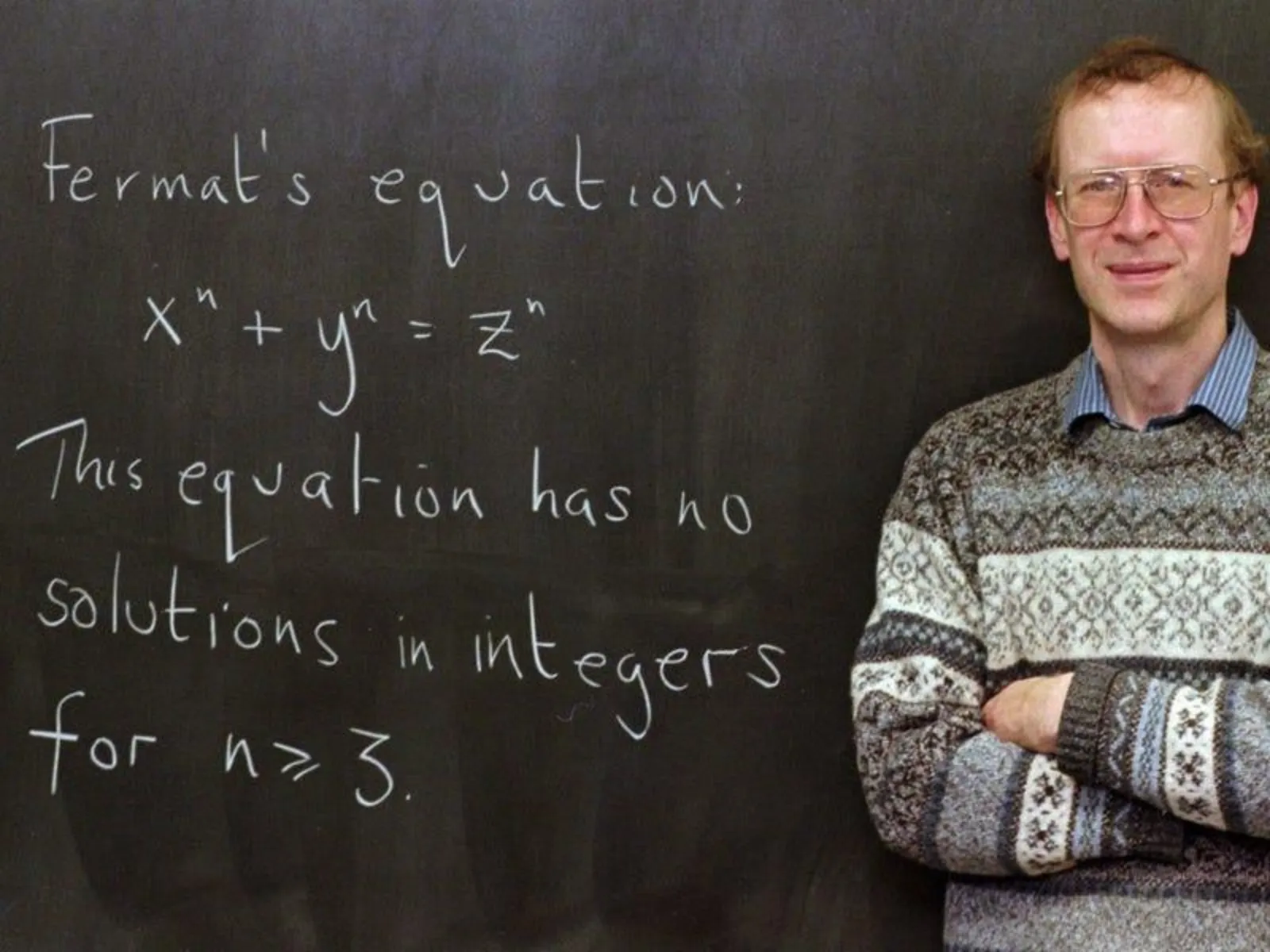
One of the primary achievements was the formalization of the proof of Fermat's Last Theorem in the Lean system. According to Anthropic, a thousand AI agents completed this work in 30 hours. A previous research version of Claude required 11 days for a similar task.
Fermat's Last Theorem states that the equation xⁿ + yⁿ = zⁿ has no solutions in positive integers for n greater than two. Mathematician Andrew Wiles completed the proof in the 1990s, more than three centuries after Pierre Fermat formulated his famous hypothesis.
It is important to understand that Anthropic is not claiming to have rediscovered the proof of the theorem. We are talking about its formalization—that is, translating mathematical reasoning into a language that allows a computer to strictly verify every logical step.
To achieve this, Lean is used, a specialized formal verification system. Unlike the plain text of a mathematical paper, a formal proof must satisfy precise logical rules. A computer does not accept an argument simply because it looks convincing.
Furthermore, for a full scientific evaluation of the result, the publication of formal files, a description of the infrastructure used, and the possibility of independent verification are essential.
Claude Solved Two Open Problems in Black Hole Physics
Another achievement reported by Anthropic was the solution to two open theoretical problems related to black hole physics. The company attributes these results to the scientific capabilities of Claude Fable 5.2.
Black hole research requires complex mathematical frameworks that combine general relativity, quantum physics, and theoretical modeling methods. Even relatively niche problems in this field can remain unsolved for years, as they require the discovery of new mathematical approaches.
The ability to apply AI to such research is of particular interest. The model can study scientific literature, build hypotheses, perform symbolic computations, and verify various solution variants significantly faster than a purely manual approach.
However, solving an open scientific problem and having a new result recognized by the scientific community are not the same thing. Final confirmation requires detailed mathematical derivations, reproducible computations, and independent peer review.
Nevertheless, the mere fact that such problems are included in the model's capability demonstration shows how far AI developers have moved beyond ordinary text-based use cases.
From Code Generation to Creating Physical Devices
Anthropic also reported that during preliminary testing, the new models helped develop three working electronic devices complete with printed circuit boards, enclosures, and software.
This is a significantly more complex task than generating a single program. Creating an electronic device requires coordinating the electrical schematic, component selection, enclosure design, PCB layout, and the software that controls the hardware.
Every stage is tied to real physical constraints. Incorrect component placement, power supply errors, or interface incompatibilities can result in a device that simply fails to work.
Therefore, the successful design of a physical prototype serves as an important indicator of AI's engineering capabilities. The model must not only propose a technical solution but also account for the dependencies between different parts of the project.
Such systems have the potential to transform the development of small electronic devices, robotics, and industrial equipment—especially if AI can independently navigate multiple cycles of design, testing, and debugging.
Anthropic's Claude Now Creates Over 90% of Code Changes
The announcement also highlights internal software development. According to the provided data, over 90% of the changes entering Anthropic's main codebase are now created by Claude with human involvement.
This figure demonstrates the scale of AI utilization within the company itself. Claude is used not just as a code autocompletion tool, but as a full participant in the engineering process, capable of analyzing large repositories, suggesting architectural changes, creating tests, and fixing discovered issues.
However, the share of code written by AI is not equivalent to the share of work performed entirely autonomously. Engineers continue to define requirements, evaluate architectural decisions, verify security, and make the final decisions on merging changes into the product.
The new models are oriented toward longer-running tasks that require maintaining context, sequentially executing dozens of actions, and coordinating multiple parallel processes. This is particularly important for large software projects, where a single task can affect many components and require several stages of verification.
Mythos 5.2: A Model for Cybersecurity and Scientific Research
Claude Fable 5.2 and Mythos 5.2 use a shared base model but differ in their safety mechanisms and access conditions.
Fable is intended for a wide range of users. It maintains safety restrictions designed to prevent the use of the model's most powerful capabilities for dangerous tasks.
Mythos is aimed at verified organizations that require more specialized capabilities in cybersecurity and biomedical research.
According to the released data, Mythos 5.2 detects 10.2% more vulnerabilities than Claude Opus 5.5 in Anthropic's internal testing. It is important to note that this result specifically pertains to the company's proprietary evaluation methodology and does not automatically imply a similar advantage in all real-world scenarios.
Access segmentation reflects one of the central challenges in the development of modern AI systems. As models become more efficient at software analysis and vulnerability discovery, they provide increased opportunities for both infrastructure security specialists and potential malicious actors.
Anthropic is attempting to address this issue by providing the most sensitive capabilities only to organizations that have undergone additional vetting.
Claude Fable 5.2: Speed and Cost
According to the provided specifications, the new generation of models is up to 30% faster than its predecessor. This is particularly critical for complex agentic workflows, where completing a task may require hundreds of sequential requests.
The announced cost for Claude Fable 5.2 is $8 per million input tokens and $40 per million output tokens. For users requiring maximum speed, a Fast Mode is available, allowing task execution to be accelerated by up to 2.5x.
Fast Mode costs $16 per million input tokens and $80 per million output tokens. This gives users the flexibility to choose between cost-efficiency and computational speed.
These rates are based on the announcement data and should be verified against updated API documentation. For large-scale agentic systems, the total cost depends not only on token prices but also on the number of parallel agents, runtime, and the volume of intermediate computations.
Why a Thousand Agents Might Matter More Than One Powerful Model
Perhaps the most interesting part of the announcement relates to a new approach to scaling artificial intelligence. For a long time, the industry's primary focus has been on increasing model size, training data volume, and computational resources.
Now, increasing importance is being placed on organizing the collective work of multiple AI systems. Instead of a single universal performer, one can create a group of specialized agents, each responsible for a specific part of a complex task.
In mathematics, some agents might search for necessary lemmas, others verify intermediate proofs, and others explore alternative approaches. In programming, a similar architecture allows for parallel code analysis, component development, test creation, and result verification.
Such an approach is capable of reducing the execution time of tasks that are difficult to solve efficiently in a sequential manner. However, scaling the number of agents does not guarantee proportional acceleration. The more participants involved, the more complex coordination, result exchange, and quality control become.
This is precisely why the experiment with a thousand agents is interesting not just for its mathematical result, but as a demonstration of a collective computing architecture.
Where the New Models are Available
Claude Fable 5.2 is presented as a model for wide-scale use via Claude, the Anthropic API, and the Amazon Web Services, Google Cloud, and Microsoft Azure cloud platforms.
Claude Mythos 5.2 is initially intended for vetted organizations working in fields that require specialized access conditions.
This strategy allows Anthropic to simultaneously expand access to new AI capabilities while maintaining additional restrictions for the most sensitive application areas.
What This Announcement Means for the Future of AI
The emergence of Claude Fable 5.2 and Mythos 5.2 shows how the evaluation criteria for frontier AI models are changing. The focus is shifting not just toward standard benchmark results, but toward the ability to perform long-running tasks, coordinate multiple agents, and produce results that can be verified mathematically or experimentally.
Formalizing the proof of Fermat's Last Theorem, solving black hole physics problems, and designing electronic devices represent three different application directions for this single technology. In the first case, the result is verified by a formal system; in the second, it requires scientific expertise; and in the third, it must meet the physical requirements of real-world hardware.
That said, these claimed achievements must be distinguished from independently verified scientific results. Preliminary test data demonstrates the model's capabilities under conditions chosen by the developer, but technical publications and external audits are required to assess their reproducibility.
If you are interested in the topics of AI, technology, and the future—welcome to my channel to discuss and share updates.
Translated from Russian. Original on vc.ru: Anthropic представила Claude Fable 5.2 и Mythos 5.2: тысяча ИИ агентов формализовала доказательство теоремы Ферма за 30 часов