Berkeley Study: AI Doesn't Actually Save Time—It Makes You Work More
A Berkeley study has shown that AI doesn't save time; instead, it increases workload, as employees work more, new tasks emerge, and cognitive overload sets in.

Researchers Aruna Ranganathan and Xingqi Maggie Ye from the Haas School of and Business spent eight months embedded within a tech company of approximately 200 employees. This wasn't just a survey or a theoretical analysis. The scientists actually observed the team's workflow from the inside: they recorded workflows twice a week and conducted over forty in-depth interviews with employees from various departments, including engineers, product managers, designers, and operations teams.
The results were unexpected. Instead of freeing up time, AI led to employees working faster, taking on more tasks, and stretching their work across more hours of the day. And this was happening voluntarily. No one from management was demanding an increased workload.
One employee put it very precisely: "It feels like AI allows you to save time and work less. But in practice, you simply don't start working less."
Similar findings are appearing in other studies. A 2024 Upwork report states that 77% of employees using AI tools reported an increase in workload, while nearly half admitted they have no idea how to achieve the productivity growth their companies expect from them.
During the Berkeley study, researchers identified several key mechanisms through which AI gradually increases workload.
The first effect is scope creep. As AI makes many things easier, job boundaries begin to blur. Product managers start writing code. Researchers take on engineering tasks. Designers start doing things that previously required a dedicated team.
As a result, the very concept of "work" gradually expands. Tasks that would have previously required hiring a new person are now distributed among existing employees simply because they now look achievable.
The third effect is cognitive overload. People are simultaneously running multiple AI tools, checking code, editing documents, and participating in meetings. This creates a constant stream of activity where both the human and the machine are working at the same time.
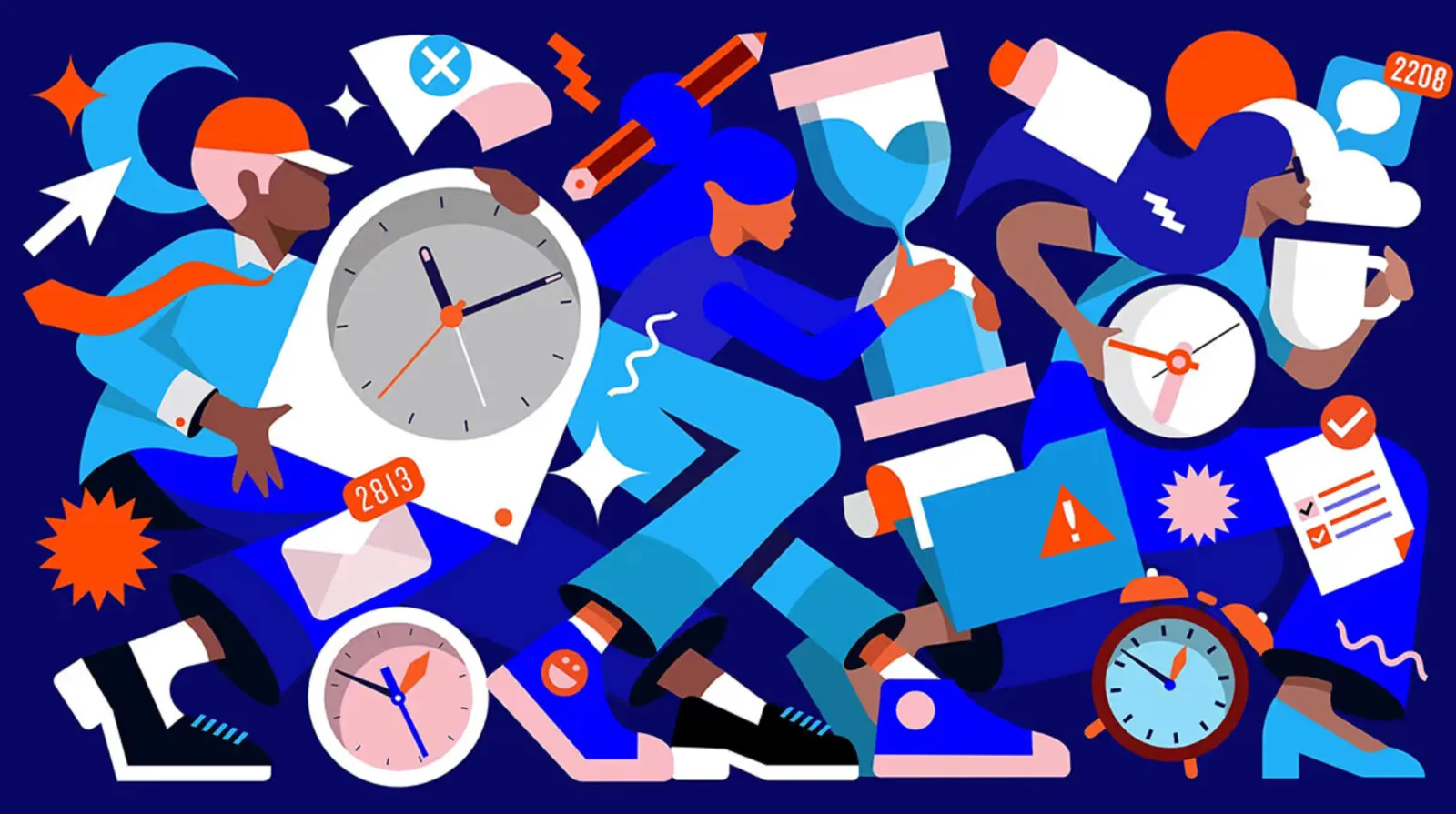
Researchers describe a typical cycle that gradually increases the load. AI speeds up task execution. Following this, expectations regarding speed rise. People begin to rely more on AI, take on a wider range of tasks, and the overall volume of work increases. Then, the process repeats.
Scientists call this effect "workload creep," the gradual expansion of the workload. No one is directly demanding that you work more, but the tools themselves make extra work too accessible and too tempting.
The most dangerous part of this process is that, in the moment, it feels very positive. Employees described a sense of momentum and empowerment. Many said that AI allows them to create things that were previously simply impossible.
But if you look at the big picture after several months, the feeling changes. People begin to feel busier, more tired, and less able to disconnect from work. By the sixth month of the study, complaints of burnout, anxiety, and decision fatigue became more frequent.
The situation is further intensified by social dynamics within teams. If one employee starts using AI and takes on extra tasks, it becomes harder for others to maintain their previous rhythm. Formally, no one is raising the bar, but informal expectations change quickly. Within a few months, what was once considered "extraordinary performance" begins to be perceived as the new norm.
In such an environment, people trying to maintain healthy boundaries between work and personal life start to look less productive compared to their colleagues.
Researchers believe this problem cannot be solved with simple advice to use AI less. Instead, they propose an approach they call "AI Practice"—conscious rules for working with such tools.
The idea is for teams to regularly review exactly how AI is impacting their workflows. This could involve scheduled discussions where employees assess whether task expansion has exceeded a sustainable workload. It also involves formulating clear rules about when AI should not be used and which tasks should not automatically expand simply because it is now possible.
Do you feel that you have started working more because of AI?
If you are interested in AI, technology, and the future—welcome to my channel to discuss and share updates.
Translated from Russian. Original on vc.ru: Исследование Berkeley: AI на самом деле не экономит время, а заставляет работать больше