GitHub Weekly: Jev gains dozens of clones, Qwen drops new image model, and 27B is optimized for laptops
Jev builds a clone ecosystem, Qwen releases a new image model, 27B compressed for laptops, new AI tools, and medical projects

In just seven days, the Jev model has spawned an entire subcategory of open-source alternatives, and model compression has reached a point where 27 billion parameters can fit on a laptop.
Jev has already developed its own ecosystem
Some teams simply tried to rebuild the same logic from scratch without access to the original TypeSafe code, and they succeeded: several competing PyTorch implementations have emerged.
Others took a shortcut by fine-tuning the open weights of Qwen3.5-4B specifically for typed solutions under the Apache 2.0 license, making them easy to deploy anywhere without legal headaches.
Native serving for Jev models via vLLM has also appeared, perfect for those already running their own inference infrastructure who don't want to set up a separate service.
Some went even further, releasing a tool that transforms virtually any LLM into a Jev-like model without fine-tuning, simply by changing how output logits are read.
A fun use case stands out: a local teleprompter for messaging that reads a screenshot directly on your device and suggests three ready-to-use replies, leaving the final send to the human. Additionally, someone applied this same idea to video rather than text: frame recognition was slashed to 0.169 seconds after a similar overhaul of the Qwen model for classification tasks.
A curated list of over a thousand Jev-related resources has also appeared, with links verified by date, along with a dozen less prominent projects in medicine, robotics, and data science that use the same architecture as a foundation. Models that are merely hype don't start getting copied this quickly.
Alibaba's Qwen-Image-2.1
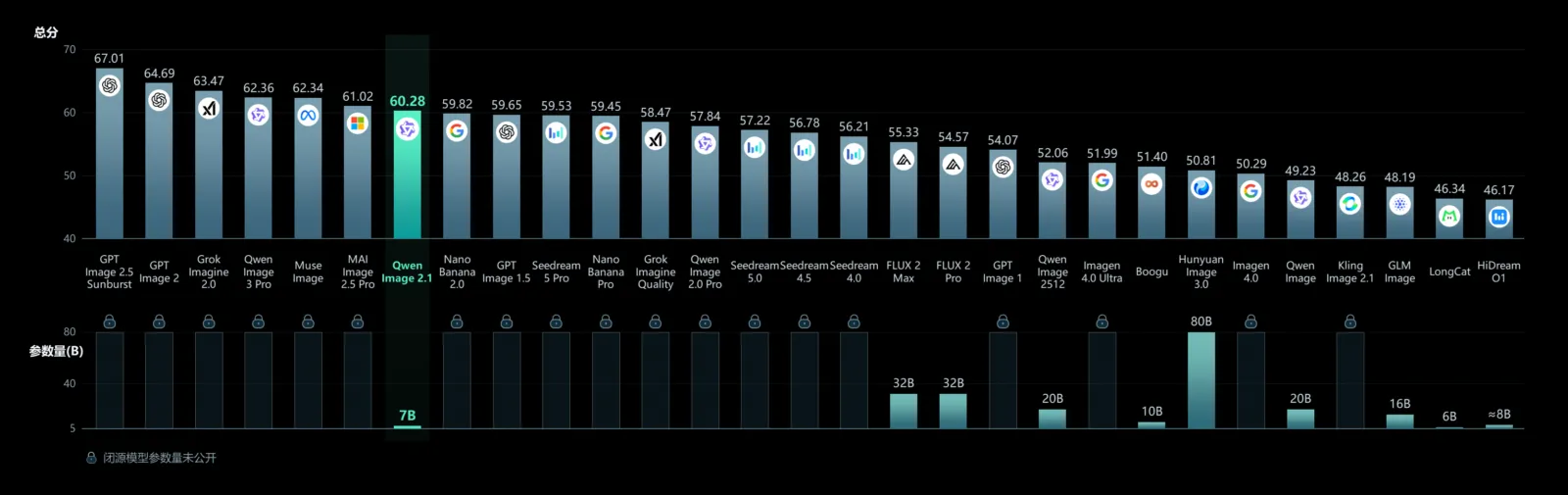
Alibaba released the weights for the new version of its image generation model, and the community responded almost instantly: within literally a few days, lightweight quantizations for local execution, ready-made integrations for popular generation tools, prompt enhancers following the official specification, and local studios with interfaces optimized for Apple hardware were all released.

27 billion parameters that fit on a laptop
A 27-billion-parameter model deserves special mention; it has been compressed to ternary weights, meaning each parameter is now stored as one of only three values rather than a standard floating-point number. There is a version that runs on a standard laptop. This is a case where compression stops being a compromise for disk space and starts changing what can actually be run locally, without a server or a data-center-grade GPU.
What else was interesting?
Two other independent open-source projects emerged this week tackling the same problem: rewriting text so it no longer sounds AI-generated, with one of them even cross-referencing the result against human text using specific metrics. Interestingly, the demand for this was so massive that several competing implementations appeared almost simultaneously, rather than just one.
Nvidia released a model into the public domain that can identify speakers and timestamps in an audio recording without prior labeling. Meanwhile, a small project claims it can transcribe ten minutes of audio in just two seconds, which sounds almost too good to be true.
In a completely different category, someone compiled a catalog of over a thousand videos created using Claude Opus 5.5, featuring a breakdown of exactly how the frames were obtained and which prompts were used.
If you are interested in AI, technology, and the future—welcome to my channel to discuss and share updates.
Translated from Russian. Original on vc.ru: GitHub за неделю: Jev успел обрасти десятками клонов, Qwen выкатили новую модель для картинок, а 27B научили влезать в ноутбук