How to build a second brain that remembers everything for you? And what do AI and Obsidian have to do with it?
Second Brain, Obsidian, AI Knowledge System, knowledge management, automation, Claude, MCP, note-taking, AI integration

Today, instead of endless chats, a new approach is emerging, known as a Second Brain, LLM Wiki, or AI Knowledge System.
Almost every user faces the same situation. You've spent several hours discussing a project with Claude or ChatGPT. You've generated great ideas, drafted a plan, and made decisions.
A week passes. A new session begins. Now you have to explain everything all over again:
"I'm a backend developer..."
"We use Kotlin..."
"We have a microservices architecture..."
"A week ago, we decided to move away from Kafka..."
Large Language Models have become incredibly smart, but their working memory is still limited to a specific session. Even if long-term memory exists, it only stores minor user preferences. It is incapable of holding thousands of pages of your documents, research, notes, correspondence, ideas, and work materials.
Instead of model memory, we get user memory
The key idea is to stop storing knowledge inside individual chats. All knowledge begins to live in its own dedicated database.
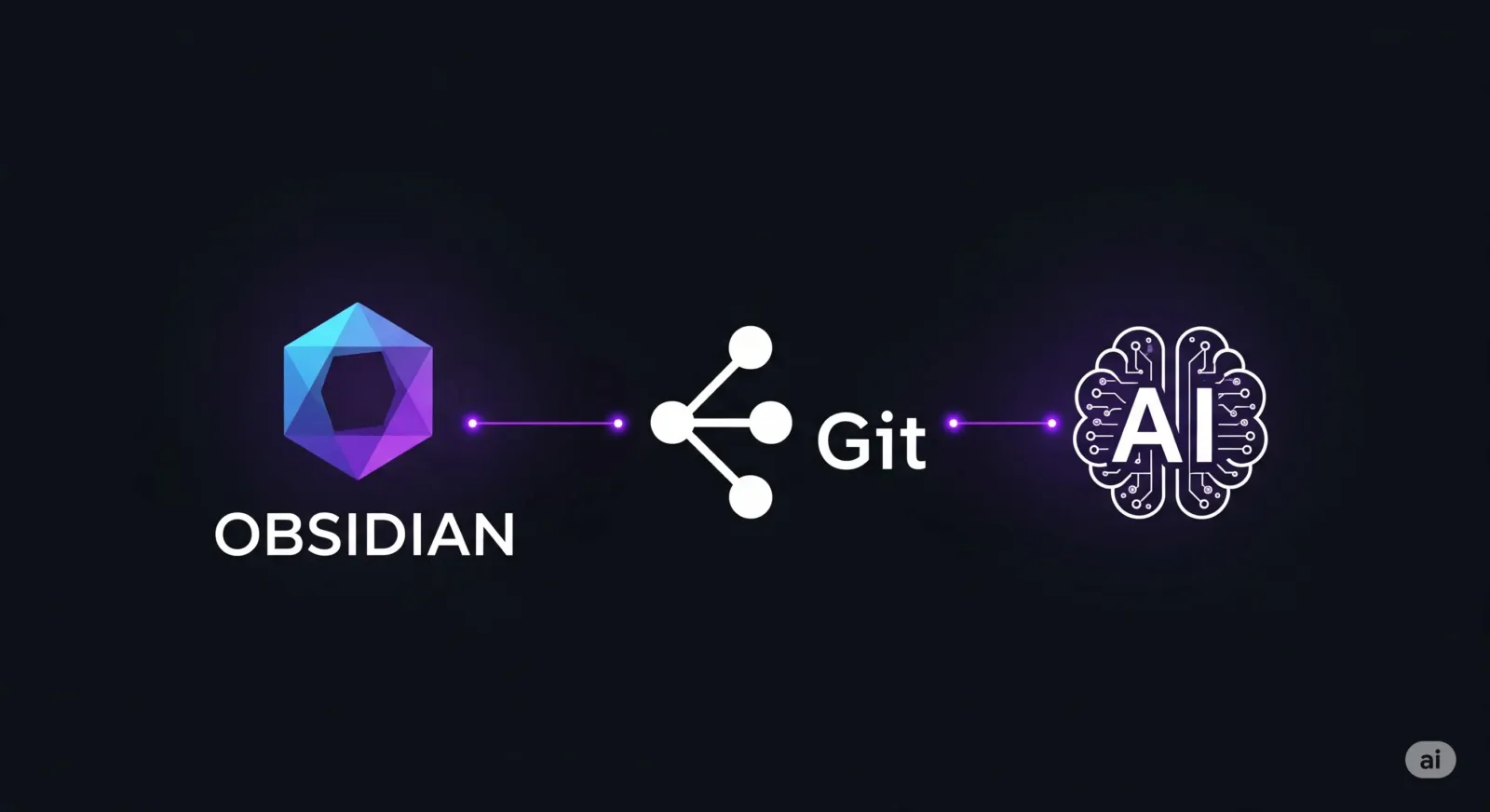
Most often, Obsidian is used for this, because all notes are just plain Markdown files. They aren't tied to a specific service, they are easy to index, they link to one another, and they can be used by any modern model.
In this setup, Claude becomes more than just a place to store information; it becomes an intelligent agent capable of reading your entire knowledge base, understanding the connections between documents, creating new notes, updating existing ones, and responding with full awareness of the accumulated context.
Why Obsidian specifically?
Most note-taking apps are closed ecosystems. Obsidian is built differently.
The memory doesn't belong to the model. The memory belongs to the user.
That is exactly why a massive number of AI tools are currently being built around Obsidian.
How does Claude get access to the knowledge?
Now, MCP—the Model Context Protocol—is bridging the gap between the model and your local files. Essentially, it is a universal protocol that allows AI to securely interact with local data sources, external services, and applications.
Through MCP, Claude can:
- read notes;
- create new documents;
- update existing ones;
- search for information across the entire knowledge base;
- work with your calendar;
- use the file system;
- interact with other services.
In effect, the model stops working just with text from a chat and starts working with the user's entire digital workspace.
The Second Brain begins to self-organize
Modern agents are already capable of automatically transforming a chaotic stream of documents into a structured knowledge base.
1. A new article is dropped into a folder.
2. The AI reads it.
3. It creates a summary.
4. It extracts key ideas.
5. It links them to existing notes.
6. It adds cross-references.
7. It identifies contradictions.
8. It updates existing pages.
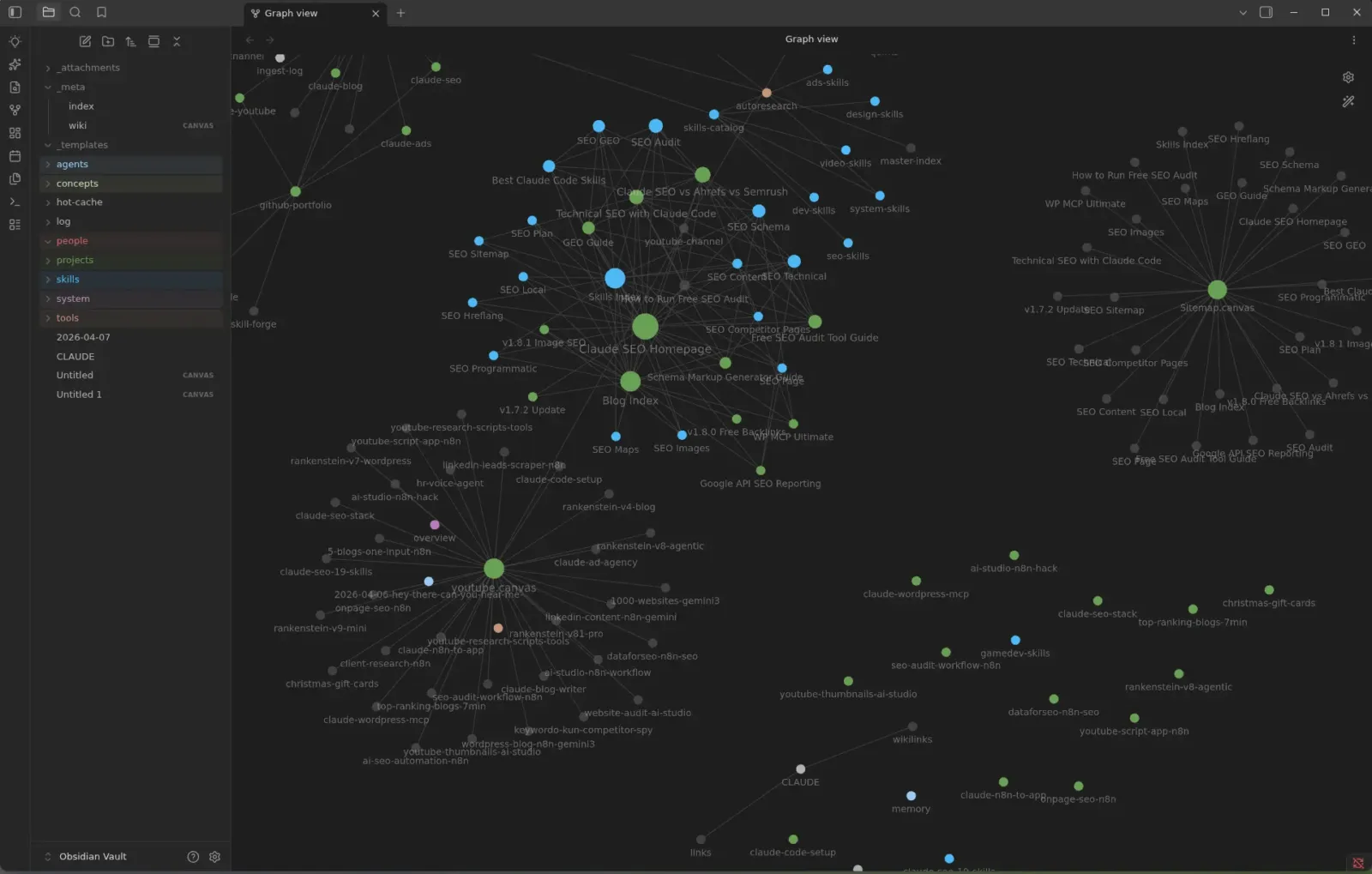
9. After a few months, the user doesn't just have a collection of notes, but a true knowledge graph.
This is exactly what is being called an LLM Wiki today.
Andrej Karpathy proposed an unexpectedly simple structure
One of the most discussed approaches is the scheme presented by Andrej Karperthy in 2026.
It consists of only two folders.
The first contains the raw materials: articles, PDFs, screenshots, etc. These are immutable sources.
The second is a living encyclopedia, written by the AI itself.
It contains summaries, concepts, definitions, connections between topics, conclusions, and new knowledge.
Humans almost stop manually maintaining their own database. They simply continue to consume information. The agent handles the rest of the work.
The next stage is already beginning
While AI used to simply answer questions, it is now starting to perform regular tasks autonomously.
For example, every morning it can:
- read new documents;
- categorize them;
- update the internal encyclopedia;
- check for broken links;
- flag outdated materials;
- generate a brief summary of changes;
- update task lists;
- check your calendar.
The user opens their computer to find an already up-to-date knowledge system. We are essentially talking about continuous, automated intellectual information processing without human intervention.
But there are important limitations
Despite the impressive capabilities, such systems cannot yet be called fully autonomous.
First, the quality of the structure depends directly on the quality of the source documents.
If a user feeds the agent a chaotic stream of information, the agent will only accelerate the spread of that chaos.
Second, automated links are not always correct. Sometimes the AI makes overly bold connections or reaches erroneous conclusions, so periodic verification remains necessary.
Third, security should be built on permissions, not just prompts. If an agent has the ability to delete files, it might actually do so one day. Therefore, modern best practices suggest using the most restrictive permissions possible and using read-only mode wherever feasible.
Why might this become the new norm?
Large Language Models are becoming cheaper and faster.
Context windows continue to expand.
MCP is gradually turning into a universal integration standard.
Specialized agents are emerging that can work not just with text, but with calendars, code, email, tasks, and corporate knowledge.
All of this is gradually changing the very role of AI.
In a few years, the main question might no longer be "which model should I use?" but "how much knowledge has your second brain accumulated?"
Translated from Russian. Original on vc.ru: Как собрать второй мозг, который помнит всё за вас? И причем здесь ИИ и Obsidian?