Meta, Google, and the US to invest $1.8 billion in a virtual biological cell. AI is learning to model life.
Investments in virtual biology, a project by Google and Meta, creating cell models, new treatment methods, disease research, Chan Zuckerberg Biohub

The total scale of the Virtual Biology Initiative is approximately $1.8 billion. Of this, Google DeepMind, Meta, and Isomorphic Labs are jointly contributing $300 million. The project's goal is to create computational models capable of predicting the behavior of living cells and helping scientists research diseases, test hypotheses, and discover new treatments.
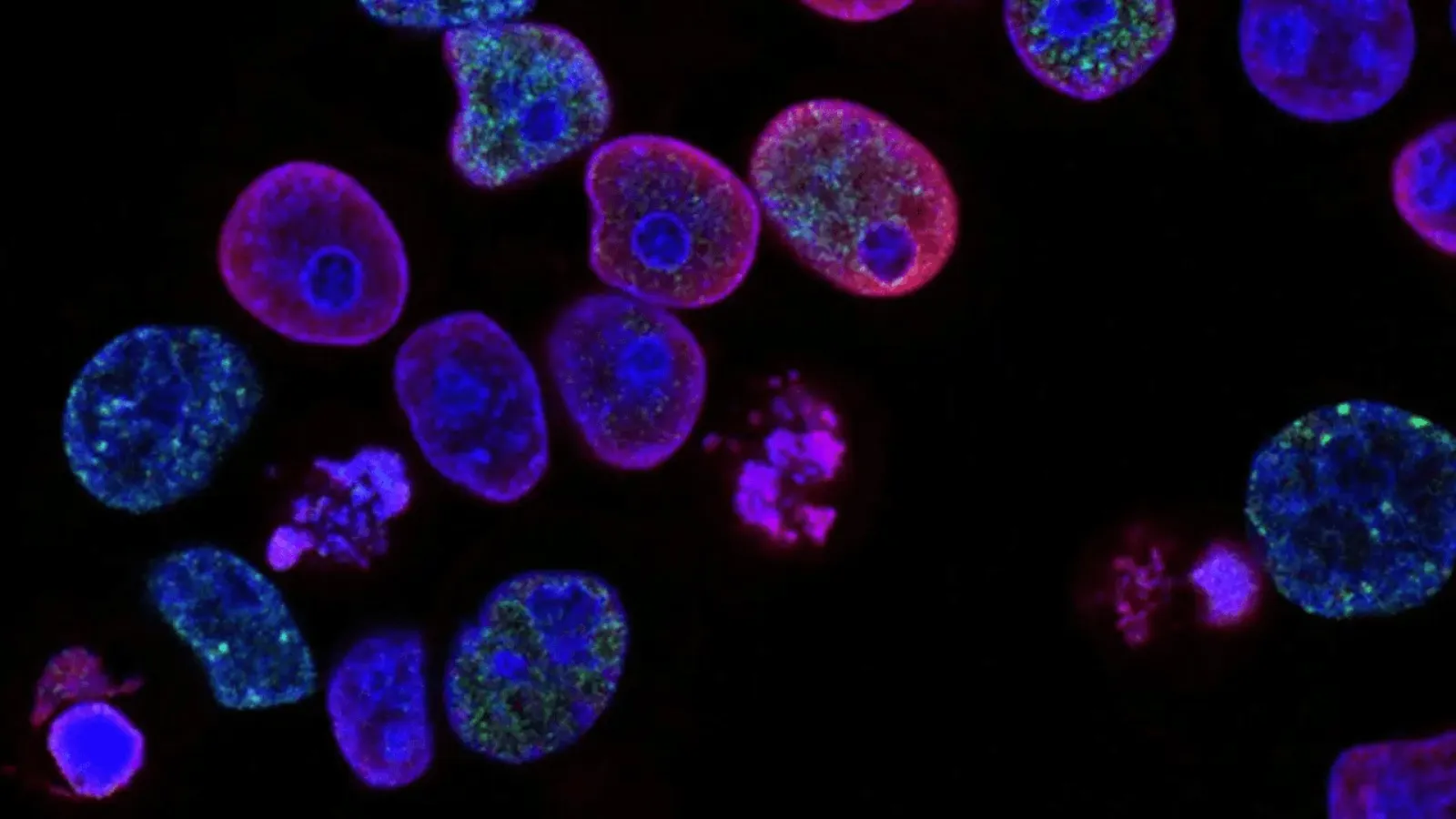
A living cell is a complex system where genes, proteins, molecules, signaling pathways, and external factors all interact simultaneously. Changing a single element can trigger a cascade of effects. Even if a researcher knows the structure of an individual protein or the mechanism of a drug, this is not enough to reliably predict the response of the entire cell.
The idea behind the virtual cell is to combine experimental biological data with AI models that can predict the consequences of various changes. Scientists will be able to explore how a cell responds to a specific stimulus, which processes are activated, and which hypotheses are worth testing in the lab. In the long term, this will allow part of the research work to be conducted using computational methods before moving to experiments with living cells.
Where will the $1.8 billion go?
The initiative is backed by the Chan Zuckerberg Biohub, a nonprofit scientific organization founded by Mark Zuckerberg and Priscilla Chan. As part of the expanded Virtual Biology Initiative program, the total resource pool is estimated at approximately $1.8 billion. This figure includes funding, computing power, data, and measurement technologies, so it is incorrect to view it as a single cash transfer for creating a model.
Google DeepMind, Meta, and Isomorphic Labs are jointly directing $300 million toward the development of technologies and datasets for virtual biology. The US Department of Energy plans to allocate more than $500 million over five years for measurements, modeling, and computing resources as part of the federal research program Genesis Mission. The US National Institutes of Health will also provide access to scientific data and research archives created through previous federal investments.
Why won't AI succeed without new data?
The main limitation of such systems is not just computing power. To train a model capable of predicting biological processes, large volumes of high-quality experimental data are required. This data must describe not only the state of cells at a specific moment but also the changes occurring under the influence of drugs, genetic mutations, and other factors.
Therefore, a crucial part of the project involves creating standardized datasets and new methods for measuring biological processes. Researchers will need to collect information on far more cell types and states than are available to most existing models. AI predictions will then need to be compared against the results of real-world experiments. Without such validation, the digital model will remain a tool for generating hypotheses rather than a reliable way to establish biological laws.
How will this change drug development?
One of the primary potential applications is the search for new drugs. Today, researchers can use computational models to screen promising molecules and study their interactions, but further verification requires laboratory experiments. More accurate models of cellular behavior will allow for the pre-emptive evaluation of more possible interventions, helping to select the most promising directions for research.
In the future, such tools could help explain why the same treatment yields different results in different patients, which biological mechanisms are linked to disease progression, and which combinations of interventions deserve further testing. However, the virtual cell will not automatically replace laboratory research and clinical trials. Any predictions regarding drug efficacy and safety must be experimentally confirmed.
Why is this a strategic bet for tech companies?
For Google DeepMind and Meta, virtual biology offers an opportunity to apply artificial intelligence to one of the most complex scientific fields. Here, generating convincing answers is not enough. A model must provide verifiable predictions about real physical processes. This requires not only algorithms but also data, computing infrastructure, and close collaboration with biologists.
When will a full-scale digital cell appear?
We are still far from a universal virtual cell. The scientific community must learn how to integrate data from different experiments, model interconnected processes, and verify the accuracy of predictions on real biological systems. Success will depend on how well the model can work with different cell types and conditions, rather than just reproducing results that researchers already know.
The most important aspect of the project is the attempt to transform biology from a science where many hypotheses must be tested one by one into a field where AI can pre-select the most promising experiments. If models truly learn to reliably predict cell behavior, scientists will gain a new tool for studying diseases and finding cures. For now, however, the $1.8 billion is funding the path toward this goal, not the confirmed creation of a digital twin of a human cell.
If you are interested in AI, technology, and the future—welcome to my channel to discuss and share updates.
Translated from Russian. Original on vc.ru: Meta, Google и США вложат $1,8 млрд в виртуальную биологическую клетку. ИИ учится моделировать жизнь.