Remember vibe coding? Yeah... That bubble burst loudly.
Vibe coding, mass developer layoffs, code quality issues, the dangers of AI—the future belongs to validated coding.

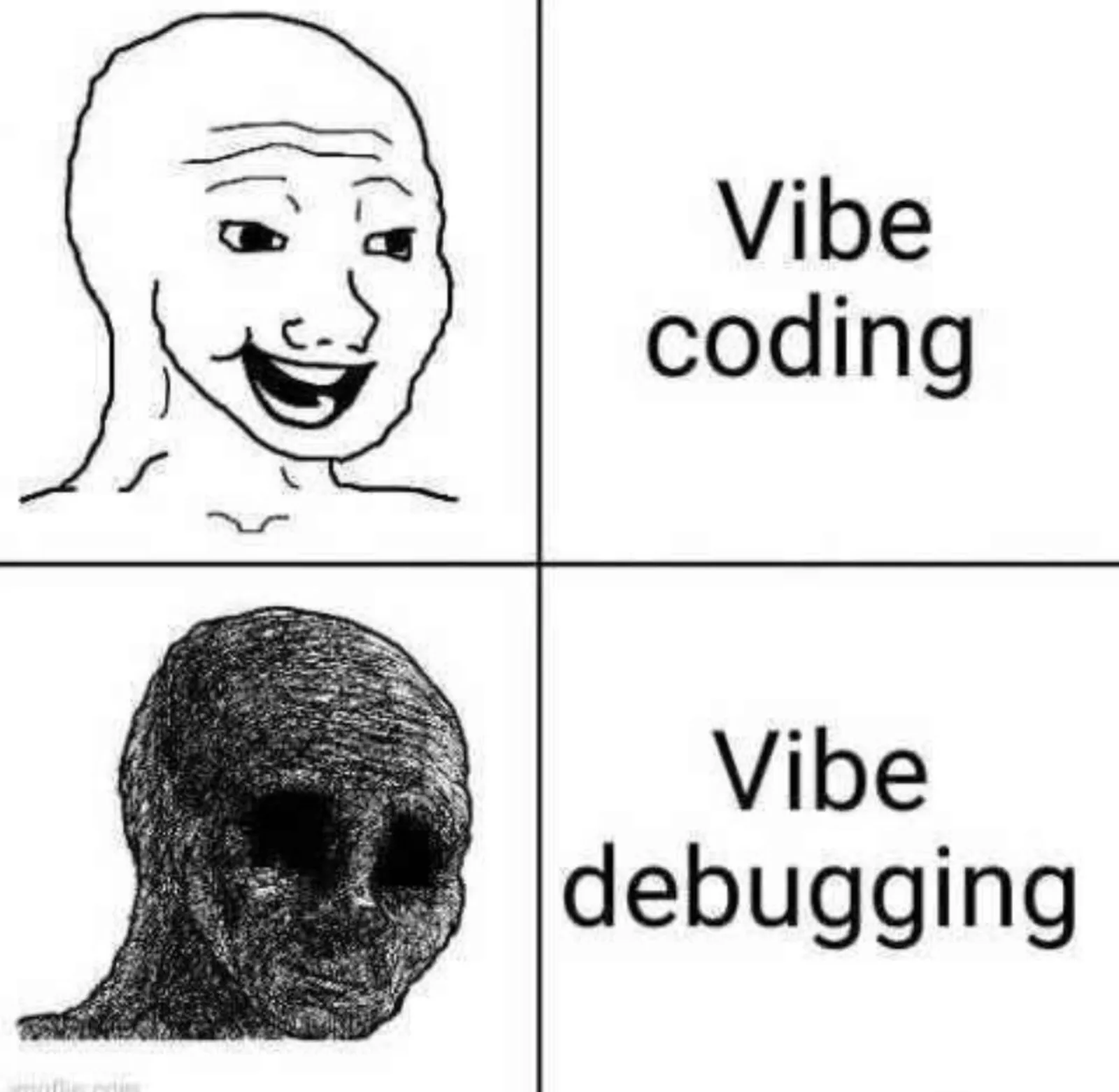
2025 became a pivotal year for developers; it felt like mass layoffs were looming. At least, that's what TikTokers and Reels creators were claiming back in March 2025. Just a few months ago, the internet was buzzing with vibe coding, and even Collins Dictionary named it the Word of the Year for 2025. No need to code anymore. Just enter your prompts and you're done!
You could assemble a Netflix clone faster than your coffee cooled. Life seemed wonderful! But then, a morning of a brutal hangover arrived. And here we are, standing amidst the chaos. The hype train known as vibe coding has derailed after hitting reality. That very same 'super vibe code,' held together by duct tape and prayers, has started peeling off the walls in thick layers.
Five months later...
Creating a hundred "vibe apps" turned out to be easy. Even a thousand isn't a problem. But maintaining even one of them is a true nightmare. The main issue isn't that AI makes stupid mistakes. The issue is that it makes them with total confidence. The code looks perfect. Clean, neat, formatted, and yet completely held together by spaghetti code—just like that meme where the refactoring looked fantastically beautiful, but absolutely nothing worked.
Now, stories are appearing more frequently—not as complaints, but as horror stories. Developers spent hours debugging code that was "95% correct," only to find that the remaining 5% destroyed the entire business logic, crashed databases, allowed users to hack newborn SaaS companies, and sent hundreds of millions of dollars down the drain. We were all blinded by the speed of vibe coding and forgot to ask about quality, security, and common sense.
We thought we were getting autopilot, but it's actually just a very fast junior dev who is happy to mess everything up. The main idea was that AI is a co-pilot. But a co-pilot doesn't fly the plane; they assist the person who already knows how to fly. AI is great at adding features, but terrible at simplification and refactoring. We are constantly increasing complexity, and AI is more than happy to help us build hellish cauldrons of technical debt.
And here are the problems awaiting us in 2026:
- Total security failures, specifically classic SQL injections.
- Hardcoded passwords and API keys.
- Lack of data validation.
- Non-existent dependencies and libraries caused by AI hallucinations.
- Ignoring basic checks and best practices.
- Hundreds of errors in business logic.
- Issues in scripts and data maintenance. Database integrity violations.
- Infrastructure and deployment difficulties.
- Technical debt and excessive architectural complexity.
- Recurring vulnerabilities across different services.
- Lack of logging and monitoring.
- Errors in migrations and inconsistent data schemas.
- Library and dependency version conflicts.
- Leaks of sensitive data and tokens.
- Loss of control over code quality.
- Lack of tests and the inability to generate them correctly.
- Failure to comply with architectural, security, and compliance standards.
- Incorrect handling of errors and exceptions.
- A general degradation of system stability, performance, and predictability.
The market has entered a correction phase.
And what about those CEOs who were already preparing layoff notices? Now, they are quietly posting vacancies for Senior Staff Engineer (AI Code Review). The hype is over. The correction has arrived.
Companies realized that the person who codes three times faster also pushes critical vulnerabilities into production three times faster and breaks the system. And we're not talking about giant corporations; we're talking about startups that release products at breakneck speed.
While CEOs dreamed of replacing all developers with AI, reality showed that half of engineers don't use AI for "thinking" at all. They just use autocomplete and suggestions—the same ones that have been built into any IDE for a long time.
AI doesn't replace a Senior. It makes a Senior even more essential.
We don't need a "prompt and vibe coding engineer." We need an architect who can look at a thousand lines of AI code and ask the only important question: "Why on earth is this here?"
More than 50% of IT tasks aren't about creating new systems, but about maintaining and servicing old ones. The future isn't vibe coding. The future is validated coding. A vibe is just a hint.
But the approval on a pull request is still provided by an engineer—that's 100% facts.
If you are interested in AI, technology, and the future—welcome to my channel to discuss and share updates.
Translated from Russian. Original on vc.ru: Помните вайб-кодинг? Да... Этот пузырь громко лопнул.


