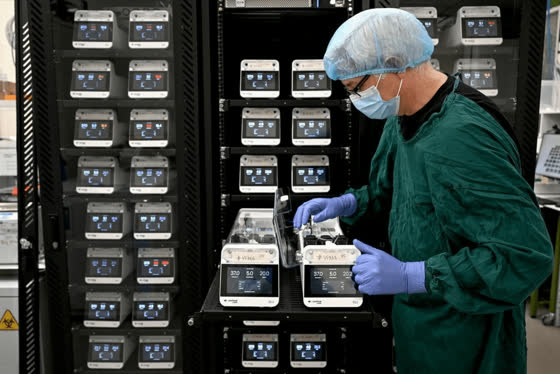
SpaceX granted permission to deploy a million satellite data centers in space
SpaceX receives approval for Project Starmind: AI-powered satellites, solar power, laser communication, risks, and competitors in space computing

Read in: Русский

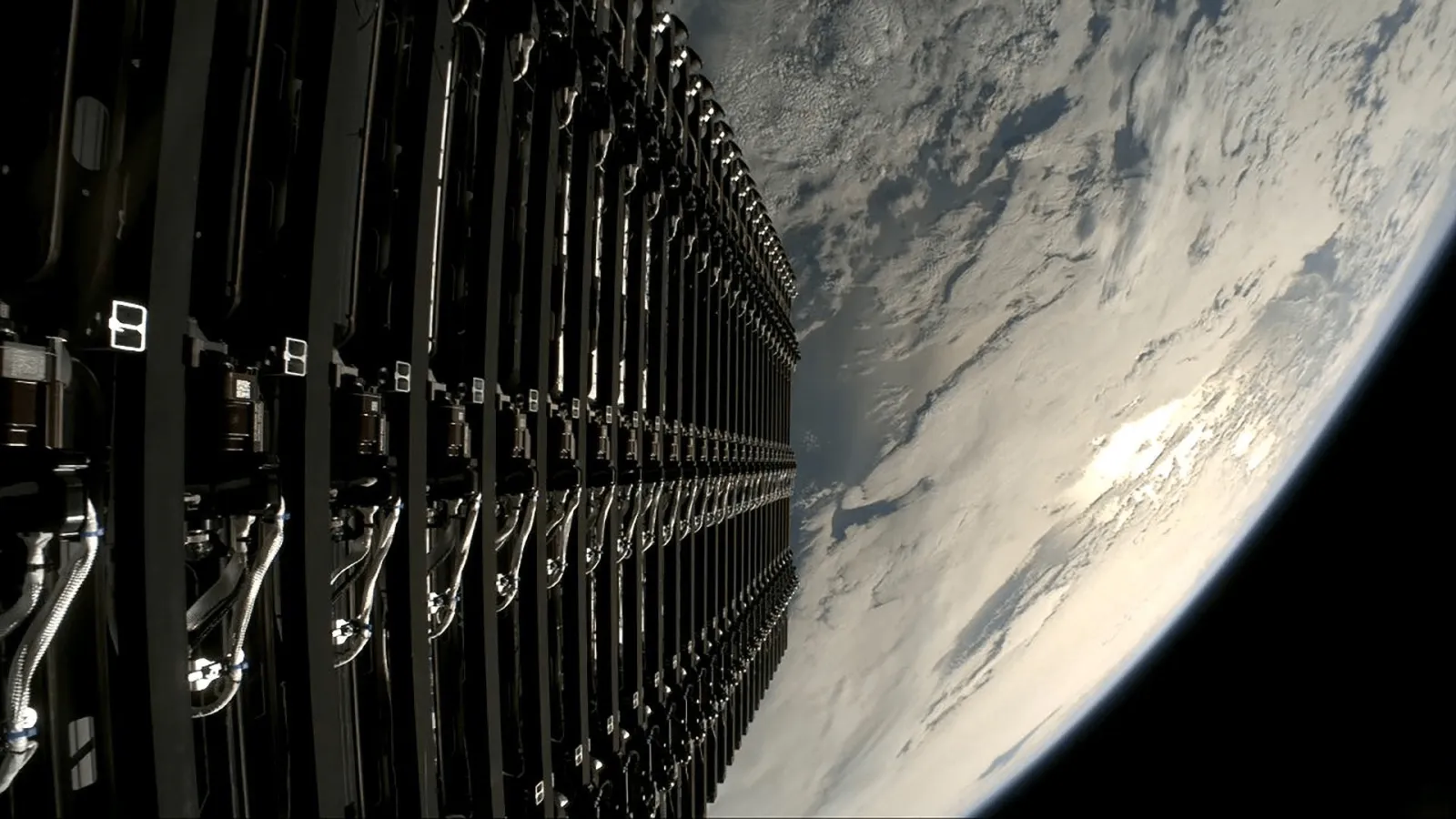
On November 25, 2026, the U.S. Federal Communications Commission (FCC) approved SpaceX's Starmind project, which involves deploying up to one million satellites equipped with AI computing modules at altitudes ranging from 500 to 1,002 km.
AI Goes Beyond Earth
The rapid growth of the AI industry is driving massive demand for electricity, cooling systems, and land for data center construction. SpaceX is proposing to move part of the computing infrastructure into low Earth orbit, powered by solar energy.
Starmind satellites will exchange information via laser communication. To process data, SpaceX plans to use Nvidia Rubin GPUs and Vera processors.
According to design documentation, the average electrical power of a single satellite's computing equipment will be 175 kW, with a maximum of 250 kW.
Once the cluster is fully deployed, the total power capacity of the computing modules could theoretically reach 175 GW. However, realizing such a scale remains a purely prospective scenario for now.
When the satellites will launch
SpaceX plans to begin launches in 2027. Under the terms of the FCC permit, the first satellite must be operational no later than November 2033.
The company aims to deploy 100,000 units by November 2035, with that number expected to reach 500,000 by 2038. Full deployment of the constellation is slated for November 2040.
The economic viability of the project largely depends on the Starship reusable rocket's ability to significantly reduce the cost of delivering cargo to orbit.

Key Tech Risks
Despite the abundance of solar energy, space-based data centers face significant engineering constraints. Since convective cooling is non-existent in a vacuum, large radiators will be required for heat dissipation.
Additional challenges will include cosmic radiation, maintenance of computing hardware, collision avoidance, and satellite disposal.
Amazon, Viasat, and the American Astronomical Society opposed the project, expressing concerns over orbital congestion and its impact on astronomical observations.

The New Space Computing Market
SpaceX is no longer the only company viewing space as a platform for AI infrastructure. Blue Origin has proposed a constellation of 51,600 Project Sunrise satellites, while Starcloud has filed an application to deploy 88,000 units. Google is also developing its own orbital computing project, Suncatcher.
If you're into AI, tech, and the future—subscribe and join my channel to discuss and share updates!
Translated from Russian. Original on vc.ru: SpaceX получила разрешение на размещение миллиона спутниковых дата центров в космосе