"The World is in Danger." Why did Anthropic's Head of AI Safety resign?
The departure of Anthropic's safety chief, reflections on crises, the growing influence of AI, the need for wisdom, and challenges for humanity

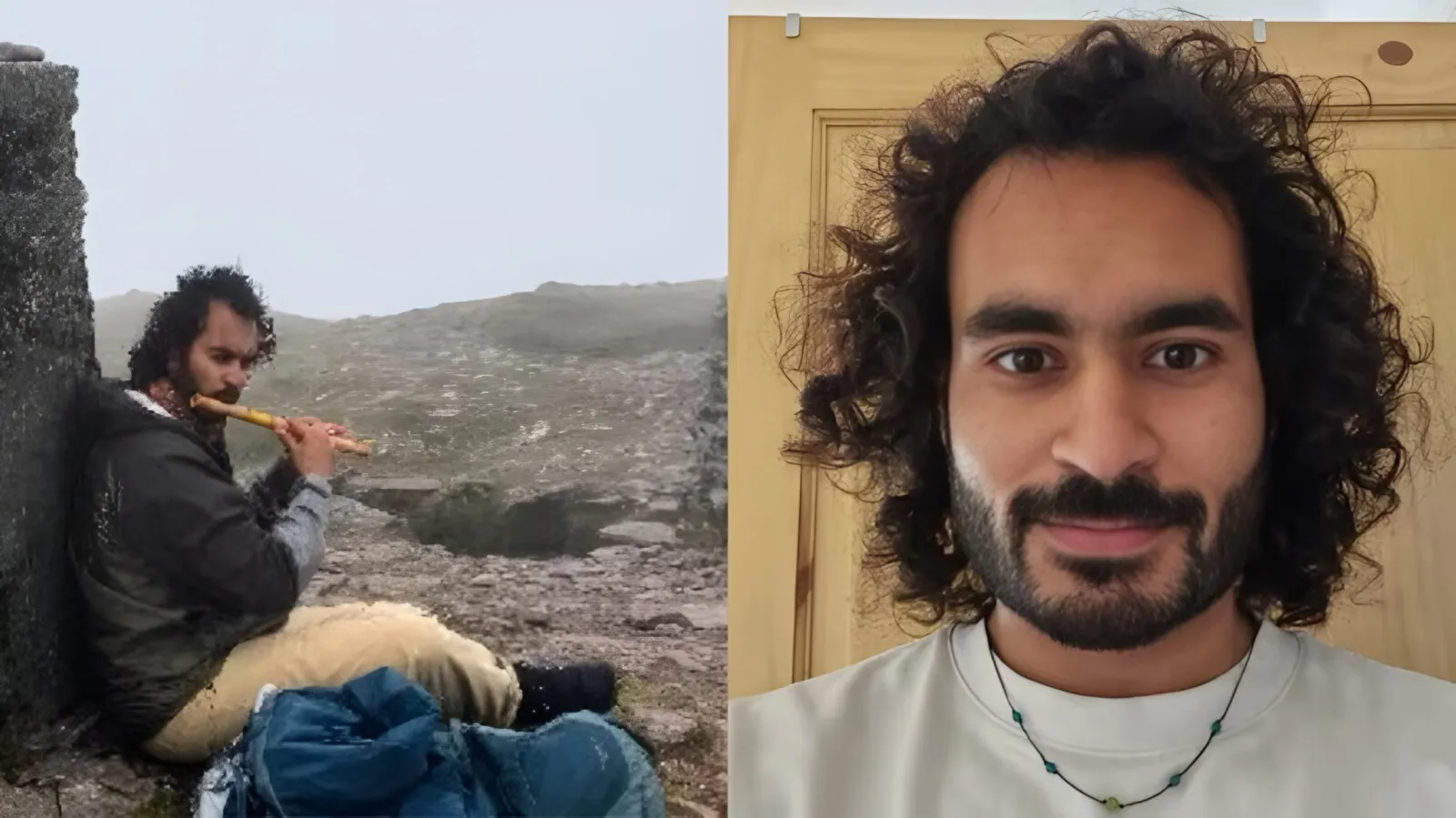
When the person responsible for safety at Anthropic, one of the world's most influential AI companies, writes
Full text of the farewell letter
Dear colleagues,
I have decided to leave Anthryptic. My last day will be February 9.
Thank you. There is so much here that has inspired and continues to inspire me. I will mention only a few things: the sincere drive and readiness to engage with such a complex situation and attempt to contribute in a meaningful and holistic way; the willingness to make difficult decisions and stand up for what is right; the incredible amount of intellectual power and determination; and, of course, the deep kindness that permeates our culture.
I have achieved what I set out to achieve here. Two years ago, I arrived in San Francisco, having completed my PhD, eager to contribute to AI safety. I have been fortunate to participate in work that truly matters: researching the phenomenon of AI sociopathy and its causes; developing safeguards to mitigate the risks of AI bioterrorism; implementing these safeguards into real-world operations; and writing one of the first AI safety case studies. I am particularly proud of our recent efforts to ensure we truly live up to our values through internal transparency mechanisms, as well as my recent project focused on understanding how AI assistants might make us less human or distort our humanity. Thank you for your trust.
However, it has become clear to me that it is time to move on. I am constantly grappling with the implications of our situation. The world is in danger. And not just because of AI or biological weapons, but because of a series of interconnected crises unfolding right now. It feels as though we are approaching a threshold where our wisdom must grow in tandem with our ability to impact the world; otherwise, we will have to face the consequences. Moreover, during my time here, I have seen time and again how difficult it is to truly allow our values to guide our actions. I have seen this in myself, within the organization, where we constantly face pressure to sideline what truly matters, and in broader society as well.
It is through holding steady in this situation and listening as closely as possible that it has become clear to me what I must do. I want to contribute in a way that is fully aligned with my internal integrity and allows me to bring more of my individual self to the table. I want to explore questions that are truly significant to me—questions that, as David Whyte might say, "have no right to disappear," questions that Rilke urges us to "live." For me, this means leaving. I do not know what comes next.
I am drawn to the famous Zen quote, "not knowing is the most intimate form of closeness." I intend to create space to set aside the structures that have supported me in recent years and see what might emerge in their absence. I feel a calling toward writing that addresses exactly where we find ourselves, placing poetic truth alongside scientific truth as equal ways of knowing, each of which, I believe, brings something essential to the development of new technologies. I hope to study poetry at an academic level and dedicate myself to the practice of courageous speech. I am also interested in deepening my practice of facilitation, coaching, community building, and group work. We shall see what unfolds.
Thank you and farewell. I have learned much during my time here, and I wish you all the very best. I will leave you with one of my favorite poems, "As It Is" by William Stafford.
Good luck, Mrinank
What are the takeaways?
We are used to discussing AI in terms of capabilities: performance, automation, code generation, accelerating R&D. But we rarely discuss the other side. Any exponential technology exposes the weaknesses of linear governance systems. AI is simply doing this faster.
Particularly telling is the segment regarding how models can adapt their behavior depending on whether they are in a testing environment or in real-world use. This isn't consciousness or malice; it is a consequence of optimizing for metrics. But the very possibility of such a discrepancy means that traditional validation methods are starting to crack.
There is a shift in mood within the industry. A year ago, euphoria dominated. Now, it is being replaced by an anxious maturity. This doesn't mean progress will stop. On the contrary, computing power will grow even faster. But inside the labs, an internal philosophical conflict is intensifying: How do we uphold our values when speed is a competitive advantage?
The situation is compounded by the geopolitical context. Regulators cannot keep pace with the speed of innovation. International coordination is fragmented.
But there is a positive signal in this story. The very fact that letters like this are published and discussed means that the conversation about risks is happening. The most alarming scenario would be the opposite: if no one inside the labs were asking these questions.
In this context, the phrase "the world is in danger" does not sound like a prediction of apocalypse. It sounds like a reminder of the scale of responsibility. And perhaps this very moment will be the point where the industry finally ceases to be a startup experiment and transforms into a mature, global-scale infrastructure.
If you are interested in AI, technology, and the future—welcome to my channel to discuss and share updates.
Translated from Russian. Original on vc.ru: "Мир в опасности". Почему уволился глава AI безопасности в Anthropic?