Vibecoders have started wearing muzzles to work with AI. Has 2030 arrived ahead of schedule?
AI masks, new technologies, Mutalk, Stenomask, voice interfaces, office changes, programmers, interacting with neural networks

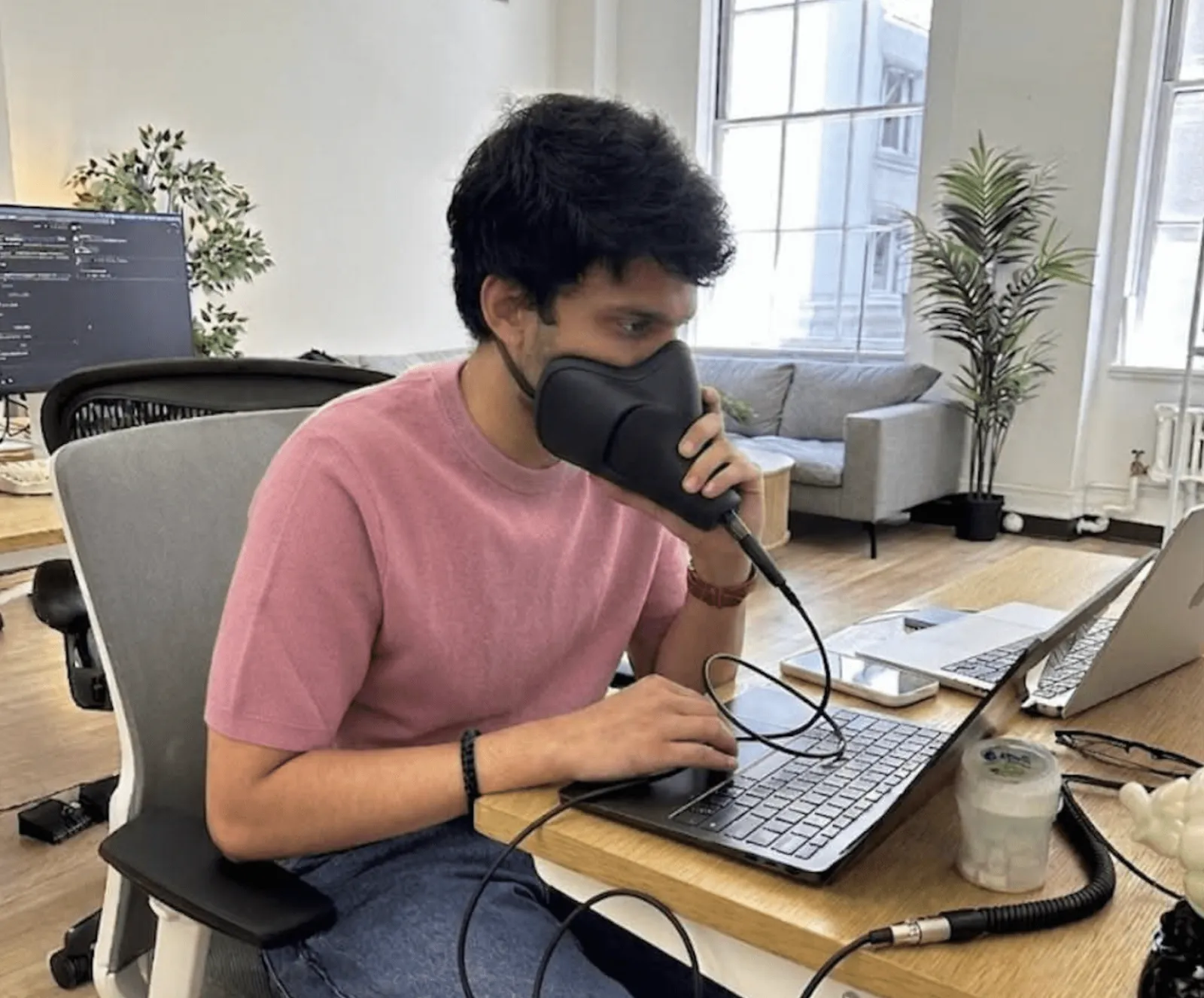
In major tech companies, it is becoming increasingly common to see programmers talking to AI through strange black masks, all to avoid turning the open-plan office into a call center.
Voice has become the new interface
The last year and a decade have completely changed how people work. While most prompts in Codex or Claude used to be typed, more and more users now prefer to simply dictate text.
It is faster, more natural, and much more convenient, especially when you need to discuss ideas, write code, edit text, or brainstorm.
The problem arises when it's not just one or two people doing this in the office, but dozens.
Imagine an open-plan office where every employee is engaged in a nearly continuous dialogue with their digital assistant. One is asking for an SQL query, another is discussing a marketing strategy, a third is rehearsing a presentation, and a fourth is dictating an email to a client.
At some point, the office begins to resemble a massive call center, except now employees aren't talking to each other, but to neural networks.
Where did AI masks come from?
This is exactly why devices like Mutalk and Stenomask have emerged.
Mutalk first appeared as an accessory for VR and the metaverse. Its developers wanted to solve a simple problem: how to talk in a virtual world at night without disturbing family or neighbors. The device completely covers the mouth and part of the lower face, housing a microphone and noise-canceling system inside. According to the manufacturer, it can reduce voice levels by approximately 20 dB, so instead of full speech, those around hear only muffled mumbling. Today, Mutalk is increasingly used not just by gamers, but by those who spend hours interacting with ChatGPT, Claude, and other voice-enabled AIs.
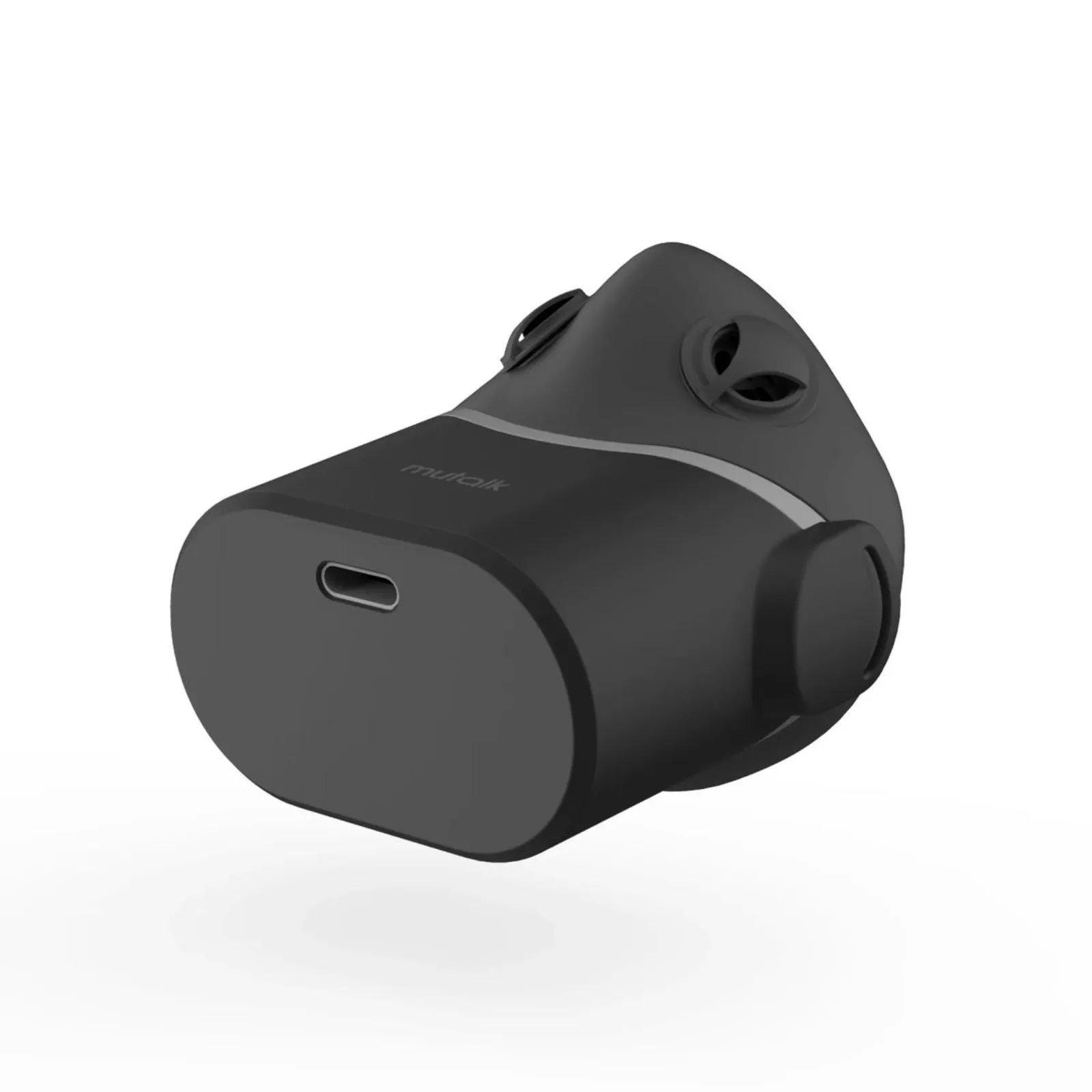
Stenomask has been around much longer. It is a professional device used for decades by court stenographers, doctors, journalists, and transcription specialists. While not directly tied to the AI trend, it has unexpectedly proven to be a perfect fit for the new era of voice interfaces. Unlike Mutalk, the primary focus here is on maximum speech clarity paired with near-total sound isolation.

What's next?
If this trend continues, we might see entirely new types of offices in a few years. Instead of conference rooms, we may see small booths designed for interacting with artificial intelligence. Instead of the quiet clicking of keyboards, people will be engaged in continuous voice dialogues with their digital assistants. And tucked in your backpack next to your laptop, you'll find not just a charger, but a personal soundproof mask.
Programmers, have you ordered your voice masks yet?
Translated from Russian. Original on vc.ru: Вайбкодеры начали носить намордники для работы с ИИ. 2030 наступил раньше срока?


