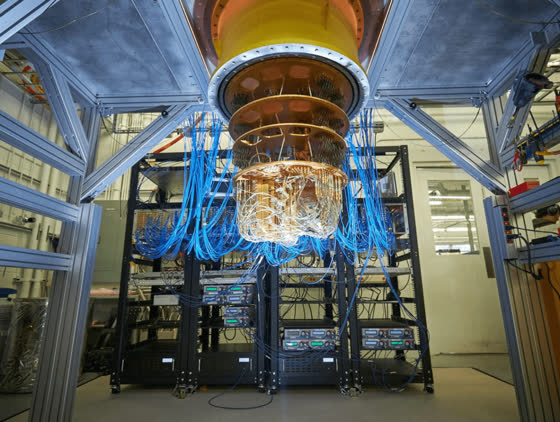
What is Edge AI? When artificial intelligence runs directly on the device.
Edge AI runs on devices, reducing latency and improving data privacy; featuring examples from NVIDIA, Qualcomm, and Apple, and applications in industry and transportation.

While the market discusses massive models and cloud GPU clusters, a quiet technological revolution is happening closer to the hardware. It is reshaping product architecture, infrastructure economics, and even the approach to data privacy.
Edge AI is a computing model where machine learning algorithms and neural networks are executed locally on edge devices—whether it's an industrial camera, an autonomous robot, a car, a medical device, or an IoT sensor—instead of transmitting raw data to the cloud for processing. The key significance here is not just faster response times, but the redistribution of intelligence within the system, moving decision-making as close to the data source as possible.
From an architectural standpoint, the traditional cloud model relies on a constant stream of data from the device to the server and back, which leads to latency, dependence on network stability, rising data transmission and storage costs, and potential privacy risks.
The technological foundation for this transition has been built through the development of specialized hardware accelerators. These are integrated into modern chips to enable tensor operations at significantly lower power consumption compared to general-purpose processors, with companies like NVIDIA, Qualcomm, and Apple systematically embedding neural engines into their platforms.
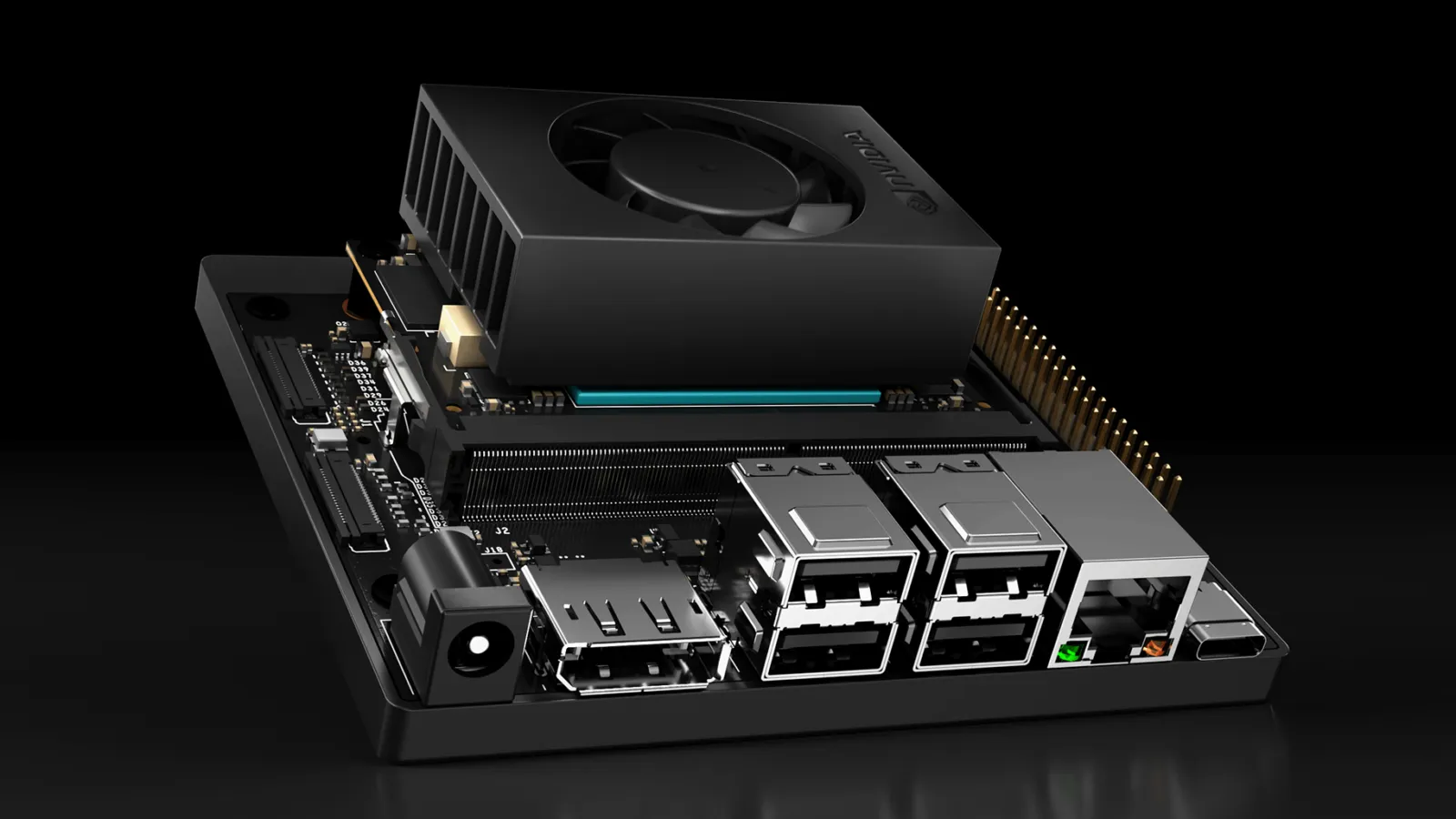
A prime example is the NVIDIA Jetson Orin Nano platform, which provides enough computing power in a compact form factor to run computer vision models and other neural network algorithms directly on the device—something that would have required a connection to server infrastructure just a few years ago.
However, the evolution of the models themselves has been just as important as hardware advancements. Techniques such as quantization, pruning, and distillation allow for a significant reduction in the size and computational complexity of neural networks without critical loss of accuracy. This makes deployment possible even on resource-constrained devices. In the TinyML segment, we are already seeing trained models running on microcontrollers with minimal power consumption, paving the way for the mass intelligence of sensor networks.
From a practical perspective, the most noticeable impact of Edge AI is seen in industries where latency and autonomy are critical. In manufacturing, for instance, instantaneous defect detection on a production line and automatic equipment shutdown directly contribute to reducing scrap and preventing costly downtime. In autonomous transport systems, decisions regarding braking or maneuvering must be made locally and in real-time, without relying on a cloud connection.
From an economic standpoint, moving computation to the edge changes the cost structure, as scaling to hundreds of thousands or millions of devices can result in data transmission volumes reaching petabyte scales.
In practice, a hybrid architecture proves to be the most sustainable: model training and initial development occur in the cloud with access to massive computing resources, after which an optimized version is deployed to edge devices, and the collected telemetry is used to further refine the algorithms.
Nevertheless, implementing Edge AI presents serious engineering challenges, including model version control, secure firmware updates, protecting devices from unauthorized access, and the need to monitor performance under resource constraints. This requires companies to establish new DevOps and MLOps processes tailored for a distributed environment where every node acts as an independent intelligent agent.
In a strategic sense, Edge AI represents a shift from centralized digital intelligence to a distributed system where decision-making is decentralized and embedded within physical objects.
If you are interested in AI, technology, and the future, welcome to my channel to discuss and share updates.
Translated from Russian. Original on vc.ru: Что такое Edge AI? Когда искусственный интеллект работает прямо на устройстве.