The ASTRA robot has assembled a structure in space for the first time: the dawn of a new era in orbital construction
The ASTRA robot assembled a space antenna, launch from Vandenberg Base, autonomous assembly in orbit, DARPA NOM4D technologies, the future of orbital construction

Read in: Русский · Español · Português
Listen to this article · 9 min
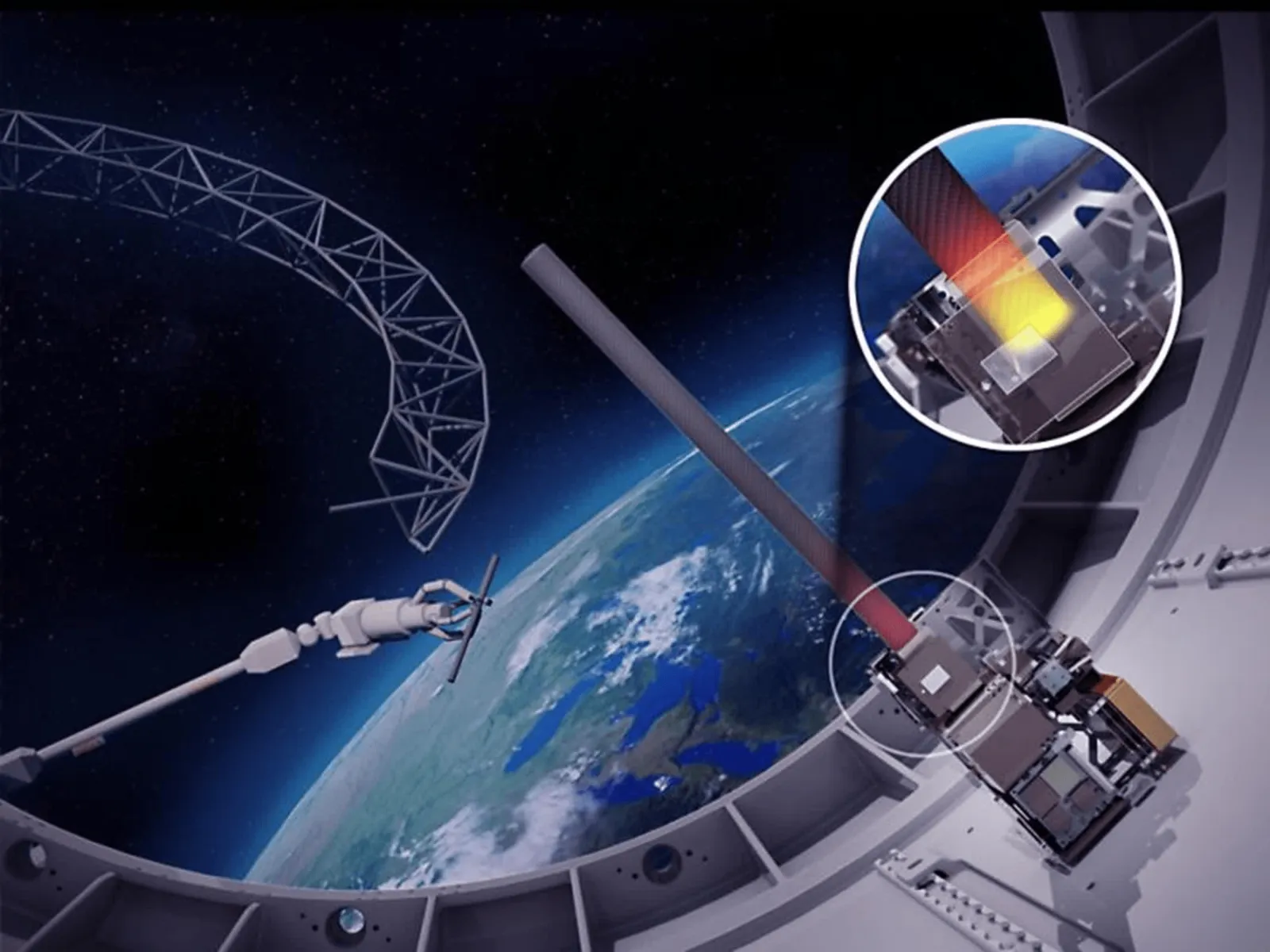
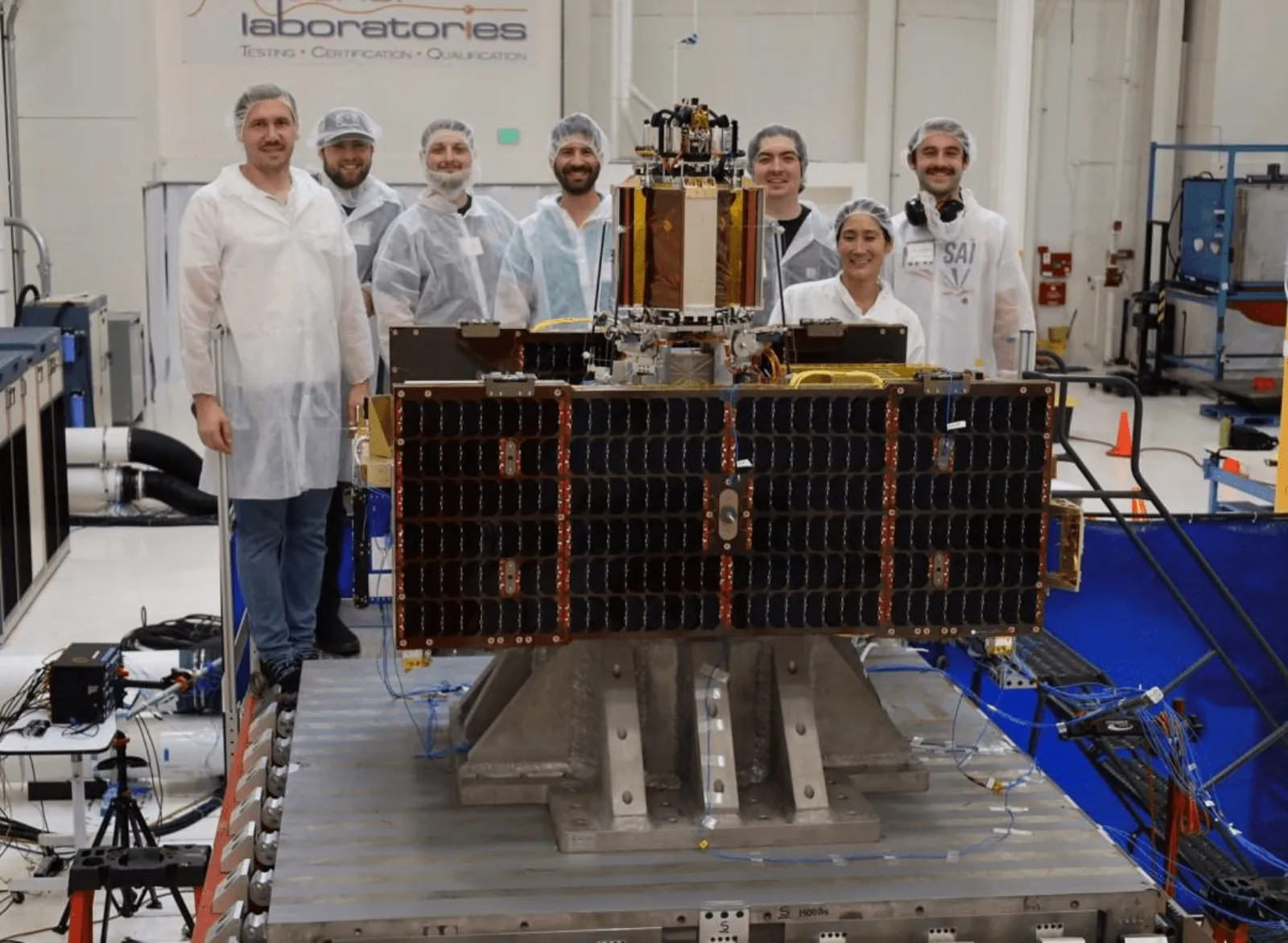
Scientists at the California Institute of Technology (Caltech) have demonstrated robotic structural assembly directly in orbit for the first time. The ASTRA spacecraft successfully joined individual components of a future space antenna frame without any astronaut intervention.
This experiment marks a significant step toward building space infrastructure that can be assembled directly in orbit. Currently, the size of satellites, telescopes, and antennas is largely limited by the diameter of the rocket's fairing. Engineers are forced to design complex folding structures that deploy only after launch. ASTRA proposes a different approach: delivering a compact kit of parts into space and assembling them into structures of virtually any required scale.
How did a robot end up in orbit?
On March 30, 2026, ASTRA launched into space from Vandenberg Space Force Base in California. The spacecraft was one of ten payloads deployed on Momentus's Vigoride 7 orbital platform. The platform itself was delivered to orbit by a SpaceX rocket as part of the Transporter 16 mission.
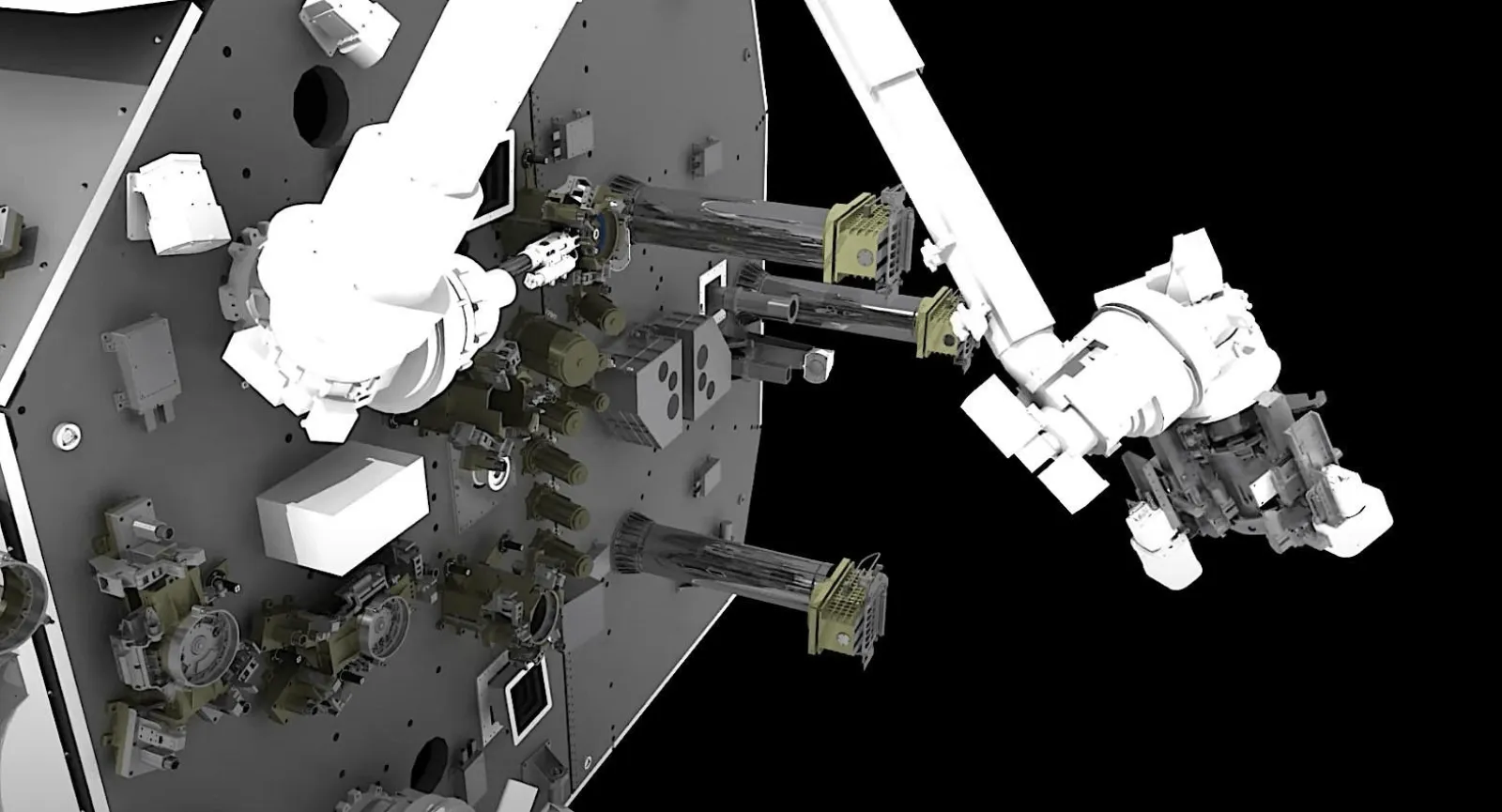
The robotic unit occupied about one cubic meter. Inside, it housed a manipulator, two pre-assembled structural segments, motorized material feeders, and a supply of parts for further construction. The design had to withstand the vibrations and G-forces of launch before deploying in microgravity.
Once in orbit, engineers remotely released the mechanisms from their shipping locks, deployed two pre-assembled segments, and began assembling the third. This stage marked the mission's primary achievement: for the first time, a robot constructed a new element of a space structure from individual components while already in orbit.
How does the ASTRA space builder work?
At the core of ASTRA lies a portal robotic system capable of moving a manipulator along three mutually perpendicular axes. This mechanism is similar to an industrial machine tool or a 3D printer, but instead of depositing material, the robot picks up finished parts, moves them, and assembles them into a spatial framework.
The construction utilizes lightweight composite fiber tubes and aluminum connectors. Components are stored in specialized motorized dispensers, from which the manipulator sequentially extracts and positions them. Once a section is assembled, the system can extend the completed part outward, clearing the workspace for the next stage.
The project also involves installing a thin reflective surface made of perforated Kapton film. This creates two tensioned mesh surfaces, held in the required geometry by a spring system. This approach allows for the creation of large reflectors with less mass compared to some traditional metal mesh designs.
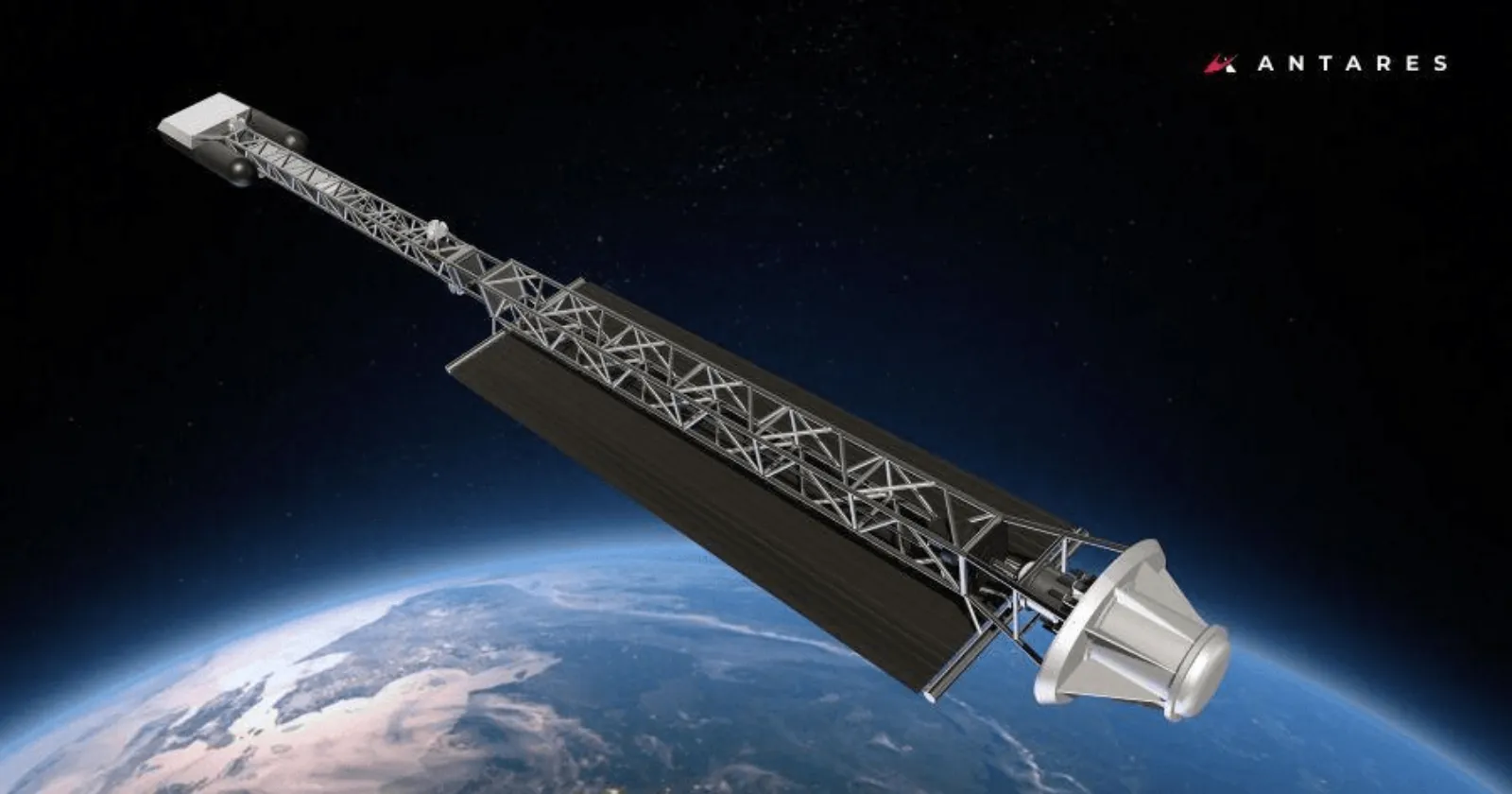
The fully assembled antenna was intended to have a diameter of approximately 1.4 meters and consist of eleven repeating segments. However, during the orbital experiment, the team only managed to assemble the third segment. According to their own estimates, the researchers are unlikely to complete the entire structure before the mission ends in December.
Autonomy with Human Oversight
Although the experiment is described as an autonomous robotic assembly, ASTRA did not operate entirely independently of human operators. Engineers on Earth sent commands, monitored operations, and analyzed images captured by onboard cameras. The spacecraft is equipped with eleven cameras, allowing for real-time monitoring of the mechanisms and the construction process.
Management was complicated by limited connectivity. The team had only seven or eight communication windows per day, each lasting about fifteen minutes. As a result, every sequence of actions had to be meticulously planned, and any discovered issues had to be resolved between sessions.
To achieve this, researchers created a second instance of ASTRA on Earth. Whenever a malfunction or unforeseen situation occurred in orbit, engineers would replicate it in a laboratory setting, test potential solutions, and only then send new commands to the space robot.
Ultimately, the core innovation lies not in completely removing humans from the loop, but in the ability to perform mechanical assembly in orbit without the need for astronauts. Moving forward, these systems could become increasingly autonomous, especially if equipped with computer vision, motion planning, and automated error detection algorithms.
Why can't we just launch massive structures from Earth?
Modern spacecraft are limited by the capabilities of launch vehicles. Even the most powerful rockets have a finite payload volume, which means large telescopes, antennas, and solar panels must be folded before launch.
The James Webb Space Telescope is a prime example. Its 6.5-meter primary mirror is composed of individual segments, and its massive sunshield had to be folded into a compact design that later unfurled in space through a complex sequence of operations.
For future observatories with mirrors measuring tens or even hundreds of meters in diameter, this approach becomes extremely difficult. The mass of the deployment mechanisms increases, as do the reliability requirements and the risk of individual component failure.
Robotic assembly allows us to fundamentally change the design paradigm. Instead of building a single, monolithic spacecraft that must fit inside a rocket's fairing, we can deliver standardized components and assemble them once in orbit. In the long term, this will enable the construction of structures far larger than any existing cargo bay can accommodate.
From Space Antennas to Kilometer-Long Structures
ASTRA was developed as part of the DARPA NOM4D program, which stands for Novel Orbital and Moon Manufacturing, Materials, and Mass efficient Design. Its goal is to develop technologies for manufacturing and assembling extremely large structures in space.
Program Director Andrew Detor explained that 'large-scale structures' refers to objects measuring hundreds of meters or even kilometers in size. Currently, humanity lacks the practical technologies required to construct such massive structures in orbit.
One of the most obvious applications involves space telescopes. The larger the mirror or reflective surface, the more light or radio signals the system can collect. Massive orbital observatories could allow astronomers to explore more distant objects and capture images with fundamentally new levels of resolution.
Satellite communication systems will represent another key direction. Large antennas can provide high sensitivity and signal directivity, which is particularly crucial for communicating with remote spacecraft and establishing new communication networks.
Finally, such technologies could prove useful for the construction of orbital solar power plants. These systems involve deploying massive solar arrays in space and subsequently transmitting energy back to Earth. While this field remains experimental for now, the ability to assemble structures directly in orbit eliminates one of its fundamental constraints.
What comes next
The team, led by Caltech professor Sergio Pellegrino, views the mission as a proof of concept rather than a finished technology. Although they were unable to assemble the full antenna, the researchers gained practical experience that simply cannot be replicated in a laboratory setting alone.
Data regarding how the mechanisms behave in space, how individual components interact, and the types of malfunctions that arise are particularly valuable. It is precisely these kinds of experiments that allow us to move beyond computer models and ground tests toward creating reliable orbital manufacturing systems.
In the future, similar robots could serve as the foundation for constructing large-scale scientific observatories, communication platforms, solar power plants, and other infrastructure. This doesn't necessarily mean humanoid machines; for most construction tasks, specialized manipulators and automated assembly platforms may prove more efficient than versatile humanoid robots.
If you are interested in AI, technology, and the future—welcome to my channel to discuss and share updates.
Translated from Russian. Original on vc.ru: Робот ASTRA впервые собрал конструкцию в космосе: начало новой эры орбитального строительства